
Marine Aluminum Customized Shapes for Offshore Construction and Deck Safety Solutions
Marine aluminum customized shapes are often introduced as "lightweight corrosion‑resistant metal," but offshore construction teams value them for something more specific: they turn the harshest environment into a predictable engineering problem. On an offshore platform, the true enemy is not only salt spray; it is the combination of chloride attack, cyclic loading, galvanic couples, and fast installation schedules that leave little room for rework. Customized marine aluminum shapes-extrusions, bent profiles, channels, T‑bars, bulb flats, chequered plates, handrail sections, ladder stiles, toe‑kicks, and equipment skids-solve that problem by bringing repeatability to deck safety and structural interfaces.
Why customized shapes matter offshore
Offshore builds are full of "transition zones" where failures start: grating to frame, handrail post to baseplate, ladder cage to deck, cable tray to stanchion, fender to bracket, helideck edge to perimeter beam. Customized aluminum shapes let designers package stiffness, drainage, anti‑trip geometry, and fastening features into a single profile rather than stacking welded plates and clips. Less welding is not just a fabrication convenience; it reduces heat‑affected zones, avoids sensitization and distortion, and improves coating consistency. With extruded shapes, tolerances are stable, holes and slots can be machined precisely, and deck systems become modular-an advantage when retrofits must be executed during short weather windows.
Functional roles in offshore construction and deck safety
In offshore construction, marine aluminum shapes typically support these functions:
Deck edge and fall protection components: Handrail top rails, mid rails, kick plates, and stanchion sleeves are frequently made from extruded profiles that integrate cable channels, internal stiffeners, or hidden fastener lands. The result is safer installation with fewer snag points.
Anti‑slip and walkway systems: Aluminum chequered plate, serrated nosings, and purpose‑built walkway extrusions can be paired with grit‑infused coatings or bonded anti‑skid strips. Aluminum's lower mass makes it easier to replace worn panels without heavy lifts.
Ladders, platforms, and access: Ladder stiles and rungs built from marine aluminum reduce weight aloft and help control center of gravity during installation. Extruded rung profiles can incorporate water shedding radii and better boot grip geometry.
Equipment skids and module frames: For non‑primary structures, aluminum shapes reduce transport weight and allow high stiffness‑to‑mass frames. They are especially useful for instrument racks, analyzer shelters, cable ladder supports, and HVAC platforms where corrosion resistance and ease of drilling are critical.
Fendering and interface members: In splash zones, custom extrusions can act as sacrificial rub rails or backing members behind elastomer fenders, provided galvanic isolation is handled correctly at fasteners and contact surfaces.
Alloys and tempering: selecting for the sea, not the brochure
The offshore environment pushes alloy selection toward two families: non‑heat‑treatable Al‑Mg (5xxx) for plates and welded structures, and heat‑treatable Al‑Mg‑Si (6xxx) for extrusions where complex customized shapes are needed.
Common offshore choices include:
5083‑H116 / 5083‑H321: A classic marine plate alloy with strong resistance to seawater and good retention of properties after welding. Often used for deck plates, bulkheads, and load‑bearing panels.
5086‑H116: Similar marine behavior with excellent corrosion performance, frequently chosen for plating and structures exposed to seawater.
5754‑H111 / H114: Good general marine corrosion resistance for formed parts and lighter plates; often used for secondary structures and enclosures.
6061‑T6 / 6061‑T651: Widely available extrusions and plates with good mechanical strength and machinability. For welded assemblies, the heat‑affected zone softening should be accounted for in design.
6082‑T6: Popular in many offshore projects outside North America; strong and well suited for extrusions, with good machinability and structural performance.
6063‑T5 / 6063‑T6: Excellent extrudability and surface finish, ideal for handrail profiles, architectural‑style safety components, and complex shapes where appearance and tight tolerances matter.
Temper is not a footnote; it is the translation from mill product to offshore performance. H116/H321 tempers for 5xxx alloys are specifically aimed at marine service, with controls intended to reduce susceptibility to exfoliation corrosion. T5 and T6 tempers for 6xxx alloys reflect different aging processes that change strength and hardness; T6 generally delivers higher strength, while T5 is often used for highly complex extrusions where dimensional stability and surface finish are important.
Parameters customers actually use to specify customized shapes
When procurement teams source Marine aluminum customized shapes for offshore construction and deck safety solutions, the most useful parameters are practical, fabrication‑oriented, and inspection‑friendly:
Dimensional tolerance and straightness: Extrusion tolerances typically follow EN 755 (extruded profiles) or ASTM B221 requirements, with agreed straightness and twist limits for long handrail runs.
Wall thickness: Common profile wall thickness ranges from about 3 mm to 12 mm depending on load, fastener pull‑out, and dent resistance. Plates for deck and access systems are commonly 4 mm to 10 mm for walkways, with thicker sections where point loads or impact are expected.
Surface condition: Mill finish for general use, anodized for improved surface durability, or marine coating systems where slip resistance and color coding are required.
Joining method: TIG/MIG welding procedure qualification, bolted connections with isolation washers, or hybrid methods. Offshore retrofits often favor bolting or riveting to reduce hot work.
Corrosion strategy: Natural oxide plus isolation design, anodizing, or paint systems designed to ISO 12944 corrosion categories, often C5‑M for marine.
Implementation standards used offshore
Standards vary by region and owner specifications, but these references commonly appear in offshore documentation and quality plans:
ASTM B221 for aluminum extruded bars, rods, wire, profiles, and tubes
ASTM B209 for aluminum plate and sheet
EN 755 (parts covering technical conditions for delivery and tolerances of extruded products)
AWS D1.2 for structural welding code-aluminum
ISO 12944 for protective paint systems in corrosive environments
NORSOK M‑501 for surface preparation and protective coating (widely used in offshore oil and gas projects)
ISO 14122 for safety of machinery-permanent means of access (often referenced for walkways, stairs, ladders)
Project specs may also require PMI verification, hardness checks, and traceability from heat number to installed location, especially for safety‑critical components.
Chemical properties table (typical composition ranges, wt.%)
Values below are typical specification ranges; exact limits depend on the governing standard and supplier certification.
| Alloy | Si | Fe | Cu | Mn | Mg | Cr | Zn | Ti | Al |
|---|---|---|---|---|---|---|---|---|---|
| 5083 | ≤0.40 | ≤0.40 | ≤0.10 | 0.40–1.00 | 4.0–4.9 | 0.05–0.25 | ≤0.25 | ≤0.15 | Balance |
| 5086 | ≤0.40 | ≤0.50 | ≤0.10 | 0.20–0.70 | 3.5–4.5 | 0.05–0.25 | ≤0.25 | ≤0.15 | Balance |
| 5754 | ≤0.40 | ≤0.40 | ≤0.10 | ≤0.50 | 2.6–3.6 | ≤0.30 | ≤0.20 | ≤0.15 | Balance |
| 6061 | 0.40–0.80 | ≤0.70 | 0.15–0.40 | ≤0.15 | 0.80–1.20 | 0.04–0.35 | ≤0.25 | ≤0.15 | Balance |
| 6082 | 0.70–1.30 | ≤0.50 | ≤0.10 | 0.40–1.00 | 0.60–1.20 | ≤0.25 | ≤0.20 | ≤0.10 | Balance |
| 6063 | 0.20–0.60 | ≤0.35 | ≤0.10 | ≤0.10 | 0.45–0.90 | ≤0.10 | ≤0.10 | ≤0.10 | Balance |
A distinctive offshore viewpoint: design for water, not just strength
Offshore safety components fail as often from trapped water and crevice corrosion as from overload. Customized marine aluminum shapes can be engineered to "drain by default." Designers can specify internal weep paths, radiused corners that shed salt deposits, and standoff lands that prevent seawater from sitting between two mated parts. In handrails and toe‑kicks, small geometry choices-like a cap shape that avoids upward‑facing ledges-reduce maintenance cycles more effectively than adding thickness.
Galvanic behavior is the other hidden driver. Aluminum coupled directly to stainless steel fasteners in a wet chloride environment can corrode aggressively at contact points if not isolated. Offshore‑ready customized shapes often include wider bearing faces for isolating washers, slots that accept dielectric barriers, and clear access for sealant application. In other words, the profile becomes part of the corrosion control system, not just a piece of metal.
Where Marine aluminum customized shapes deliver the most value
They excel in deck safety solutions that must be installed quickly, inspected easily, and replaced without heavy lifting: modular handrail runs, ladder systems, anti‑slip walkways, edge protection, cable tray supports, and secondary frames. For offshore construction teams, the winning feature is not merely "lightweight." It is the ability to standardize safety and structural interfaces across a platform, reduce hot work, improve corrosion outcomes through smarter geometry, and keep the deck safe under relentless salt, spray, and motion.

Related Products
Marine aluminum fencing and railings
Marine Grade Aluminum Fencing and Railings are fabricated using marine-grade aluminum alloys such as 5083, 5052, and 6061, which are engineered specifically for protection against saltwater corrosion and marine atmospheric conditions.
View Details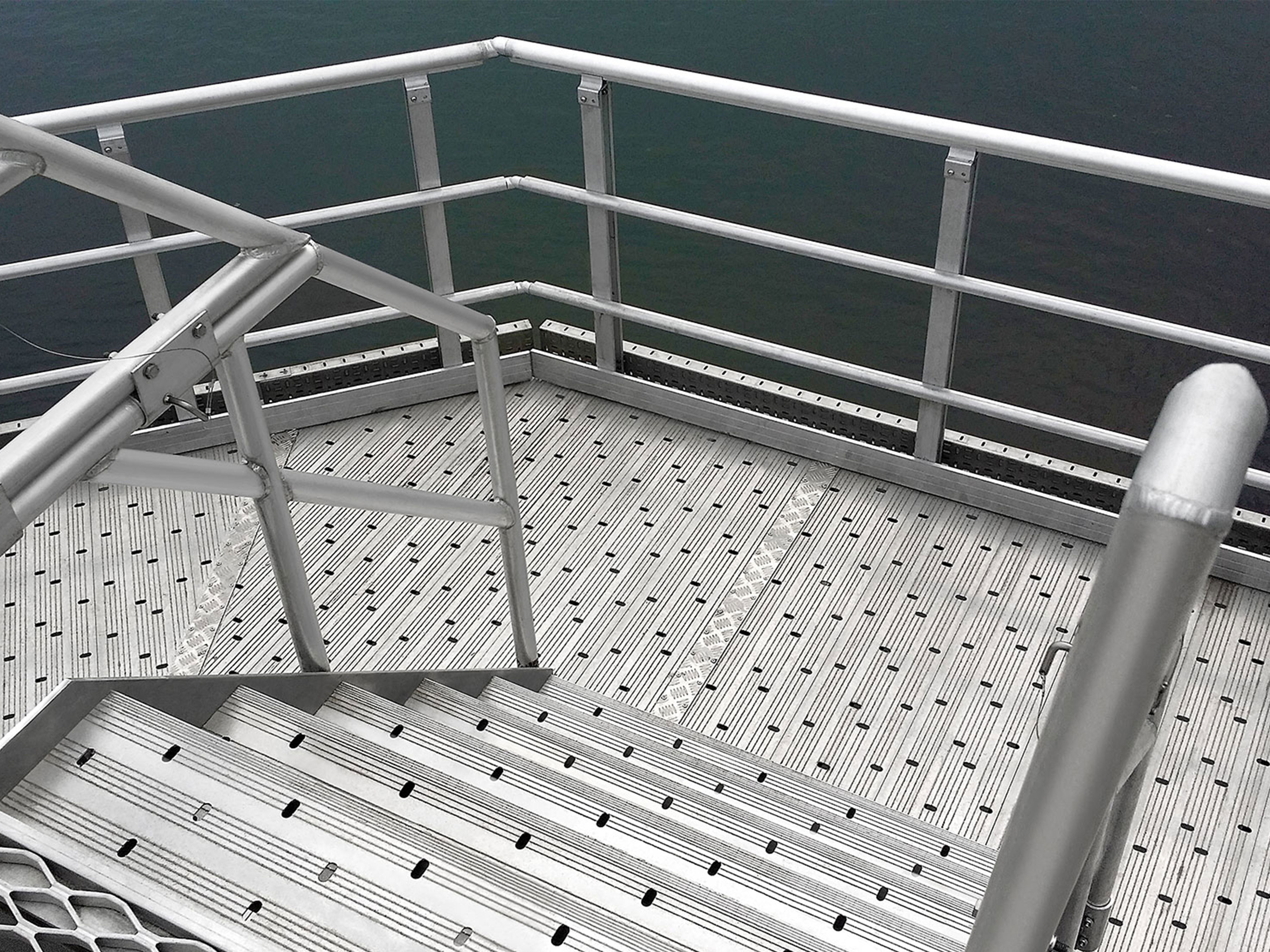
Marine aluminum customized shapes
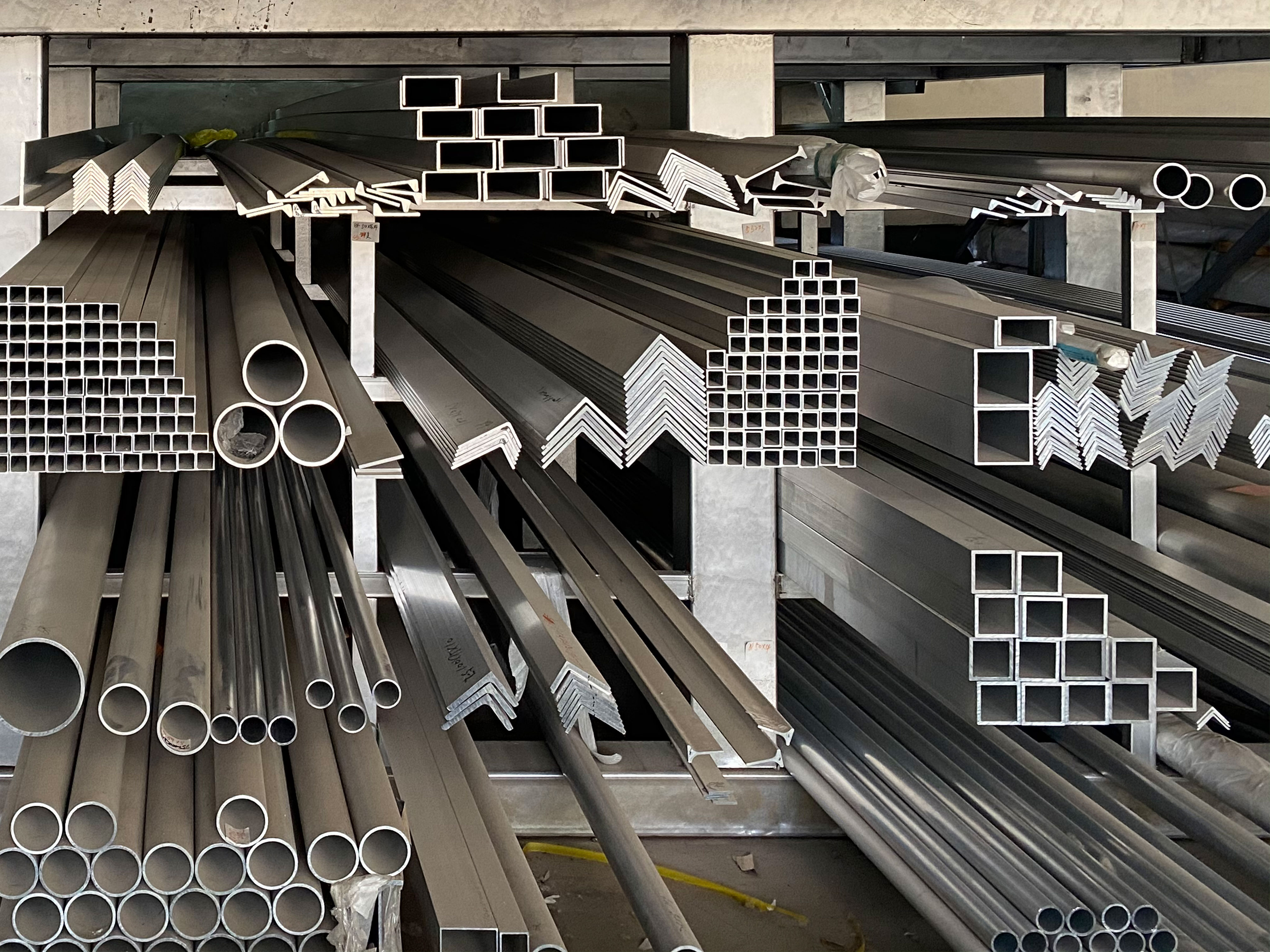
Marine Grade Aluminum Customized Shapes encompass a broad range of aluminum extrusions and fabrications engineered beyond standard profiles—such as channels, angles, tubes, and beams—into complex, project-specific geometries.
View Details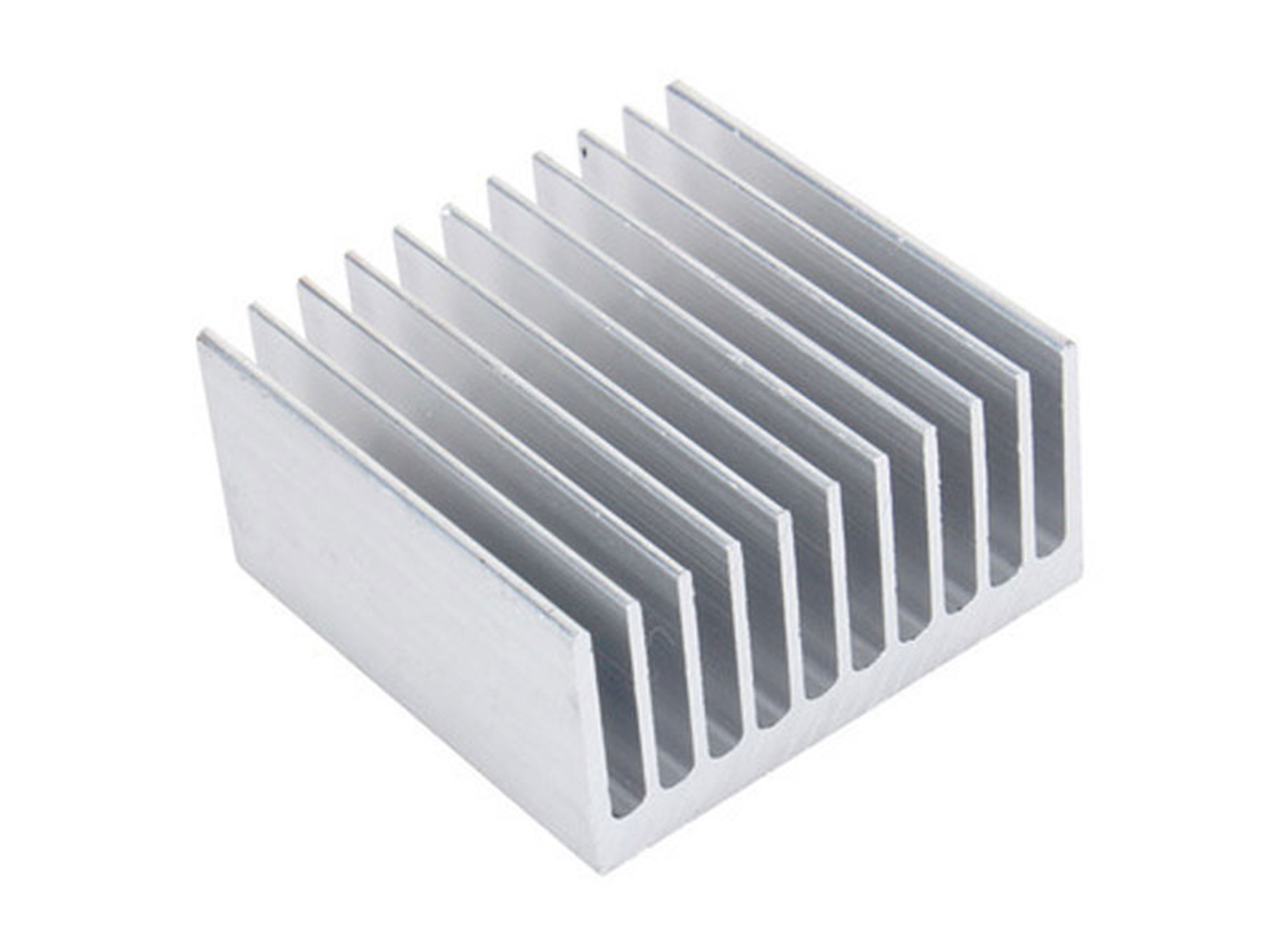
Marine aluminum heat sink profile
Marine Grade Aluminum Heat Sink Profiles utilize alloys such as 6061 and 6063 that not only exhibit high thermal conductivity but also possess excellent corrosion resistance required for saltwater exposure.
View DetailsRelated Blog
Marine Aluminum Fencing and Railings for Seawater Proof Offshore Deck Railings
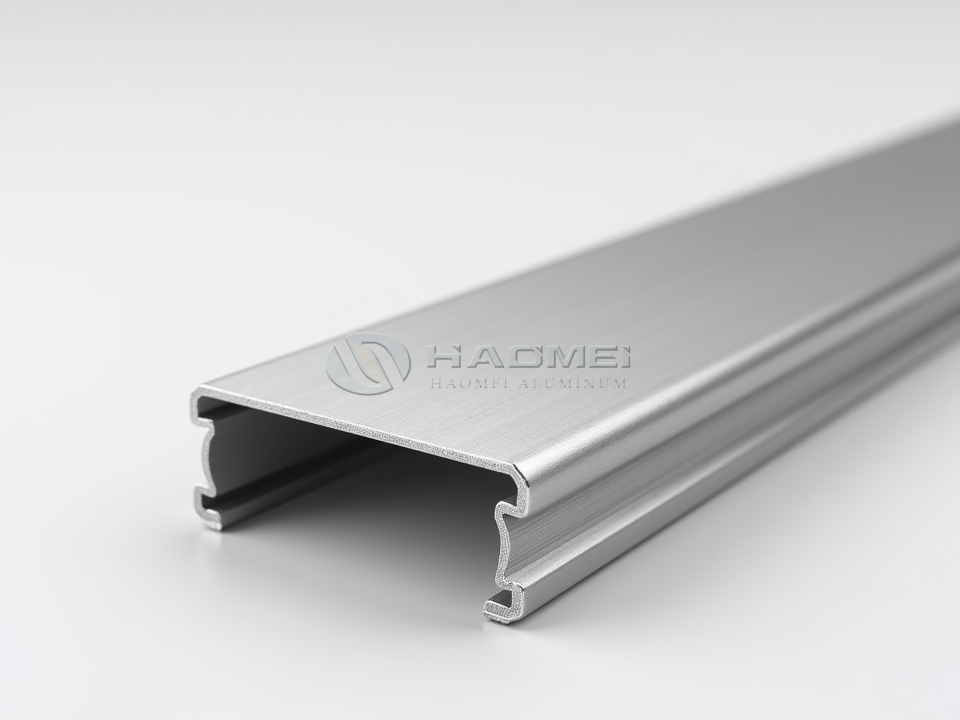
Learn how marine aluminum fencing and railings resist seawater, carry deck loads, and serve safe offshore platforms, boats, docks, and walkways reliably.
View Details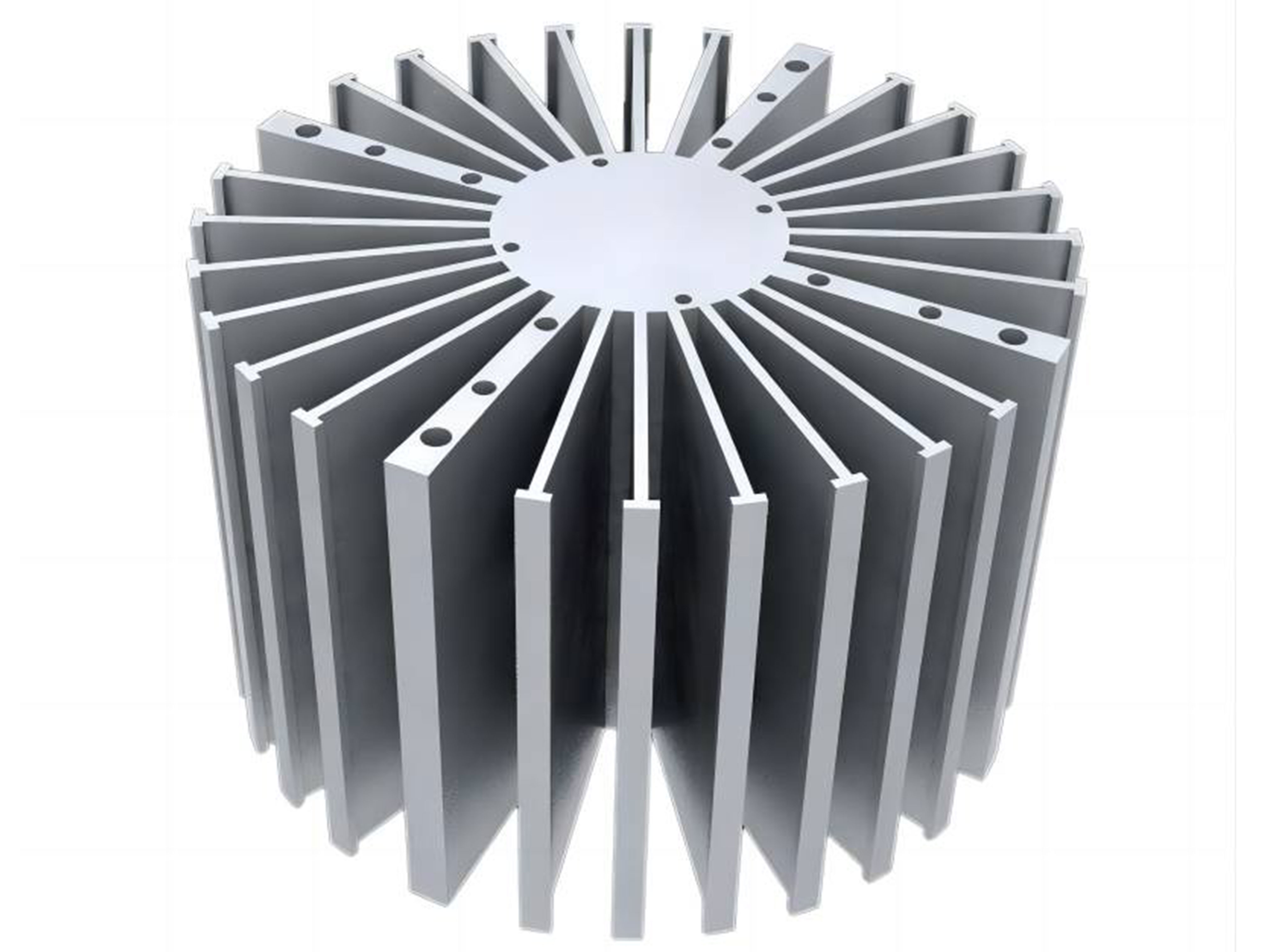
5052 Marine Aluminum Fencing and Railings for High Strength Offshore Platform Guardrails
In marine and offshore environments, the demand for materials that combine excellent strength, corrosion resistance, and durability is paramount. 5052 marine aluminum is a preferred choice for high-performance fencing and railings.
View Details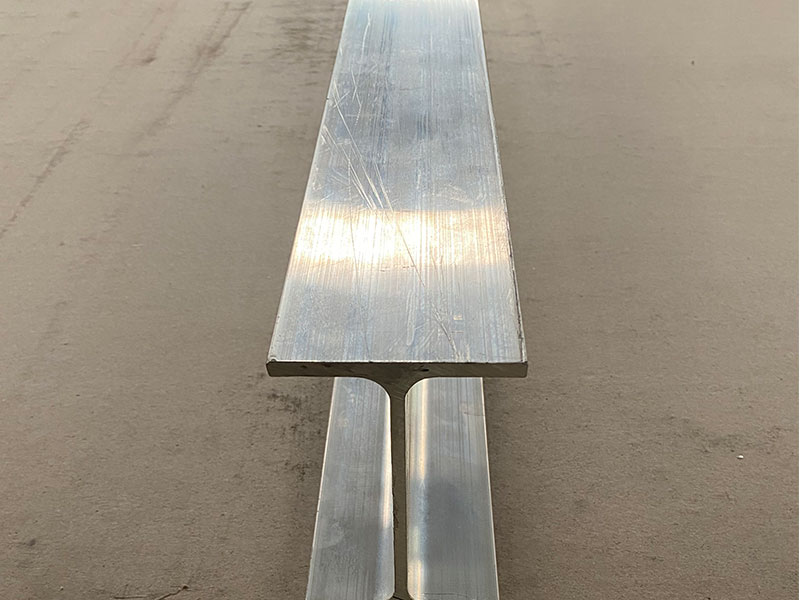
Marine Aluminum Heat Sink Profile for Cooling Offshore Marine Electrical Systems
In the ever-demanding offshore marine environment, electrical systems are subjected to extreme conditions—saltwater corrosion, temperature fluctuations, mechanical stresses, and continuous operation.
View Details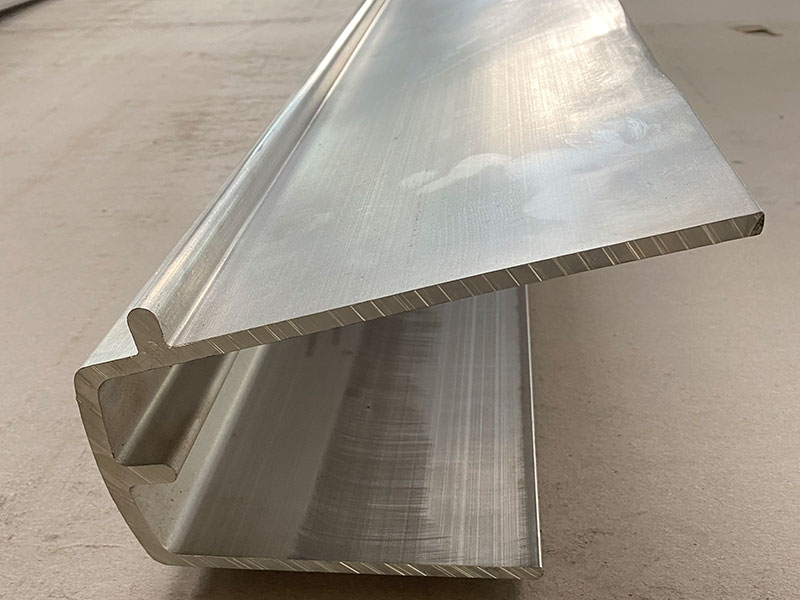
6063 Marine Aluminum Heat Sink Profile for Offshore Platform Cooling Solutions
6063 Marine Aluminum Heat Sink Profile for Offshore Platform Cooling SolutionsOffshore platforms don't "run hot" in the same way a factory does. Heat offshore is rarely a single obvious source; it's a constant accumulation-inside electrical enclosures.
View Details
5083 Marine Aluminum Fencing and Railings for High Strength Marine Applications
Marine environments demand materials that can withstand harsh conditions, including corrosive saltwater, high humidity, strong winds, and constant mechanical stresses.
View Details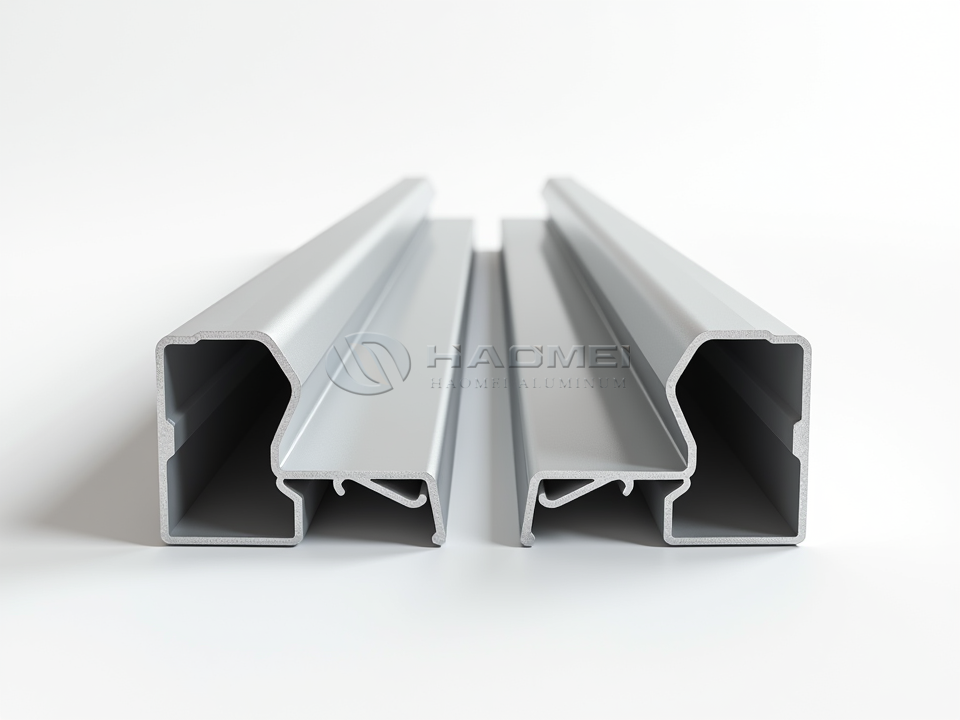
Marine Aluminum Heat Sink Profile for Efficient Heat Management for Coastal Systems
Explore marine aluminum heat sink profiles engineered for reliable cooling, salt-spray resistance, and long service life in coastal systems.
View Details
Leave a Message