
6082 Marine Aluminum Bar for Marine Platform Design and Construction
Marine platforms are often described in terms of scale, load, and durability. Yet from an engineering perspective, the real story begins much earlier-inside the material itself. Before a platform resists wave impact, carries personnel, supports equipment, or survives a salt-laden atmosphere, its structural logic is already written into the alloy selected for the job. In that conversation between design intent and marine reality, 6082 marine aluminum bar occupies a particularly interesting place.
What makes this alloy valuable is not simply that it is "strong" or "corrosion resistant." Many materials can claim one of those traits. The distinctive advantage of 6082 aluminum bar for marine platform construction is the way it balances structural strength, machinability, weldability, and weight efficiency in an environment where every kilogram and every maintenance hour matters. For designers of offshore walkways, service platforms, boarding structures, deck support frames, and coastal access systems, 6082 offers a practical answer to a difficult question: how do you build something rigid enough for service, light enough for efficiency, and reliable enough for long-term exposure to seawater?
Looking at 6082 Marine Aluminum Bar from the Designer's Viewpoint
Designers often face a tension between slenderness and safety. Oversized members increase dead weight and can complicate installation. Undersized members reduce confidence under cyclic loading or accidental impact. The appeal of 6082 lies in its relatively high mechanical strength among the 6xxx series, allowing marine engineers to pursue structural efficiency without immediately sacrificing corrosion performance or fabrication convenience.
This is especially relevant in platform systems exposed to changing live loads, vibration from machinery, and the constant aggression of chloride-rich marine air. A material that supports machining precision, stable dimensional control, and sound welded fabrication can dramatically simplify project execution. That is why 6082 marine aluminum round bar, flat bar, and square bar are widely considered for marine structural and mechanical parts.
Why 6082 Is Well Suited to Marine Platforms
The marine environment is unforgiving not because it presents a single challenge, but because it combines many at once. Salt spray encourages corrosion. Moisture cycles stress joints and surfaces. Mechanical loads fluctuate. Maintenance access may be limited. In this setting, 6082 aluminum bar brings together several properties that make it attractive for platform design and construction.
Its strength level is one of the first reasons it is selected. Compared with more general-purpose marine aluminum alloys in the 5xxx and 6xxx families, 6082 can provide a favorable combination of yield strength and tensile strength, especially in heat-treated tempers such as T6 and T651. This makes it useful for parts where stiffness and load-bearing capacity are central.
Its corrosion resistance is also important. Although alloy selection in direct seawater immersion and critical hull plating applications may often lead engineers toward other established marine alloys, 6082 performs very well in many marine atmospheric, splash-zone-adjacent, and structural support applications, especially when design details, drainage, protective finishing, and galvanic isolation are properly managed.
Weldability adds another dimension to its value. Marine platform projects often require field or workshop fabrication with welded assemblies. 6082 can be welded by common arc welding methods, though as with many heat-treatable alloys, the heat-affected zone may experience softening and must be considered in design calculations. This does not diminish its usefulness; rather, it means the alloy rewards informed engineering.
Machinability is another overlooked advantage. Marine platforms are rarely made only from straight-cut stock. They involve fastening points, custom brackets, milled surfaces, drilled interfaces, and tolerance-sensitive connections. 6082 bar stock machines cleanly and efficiently, making it suitable for precision marine components.
Typical Product Forms of 6082 Marine Aluminum Bar
For marine platform design, 6082 aluminum bar is commonly supplied in several cross-sectional forms, each chosen according to fabrication route and structural role.
6082 aluminum round bar is often preferred for machined shafts, pins, connectors, pivot elements, standoffs, and custom turned parts. It also appears in railing systems and structural joining components.
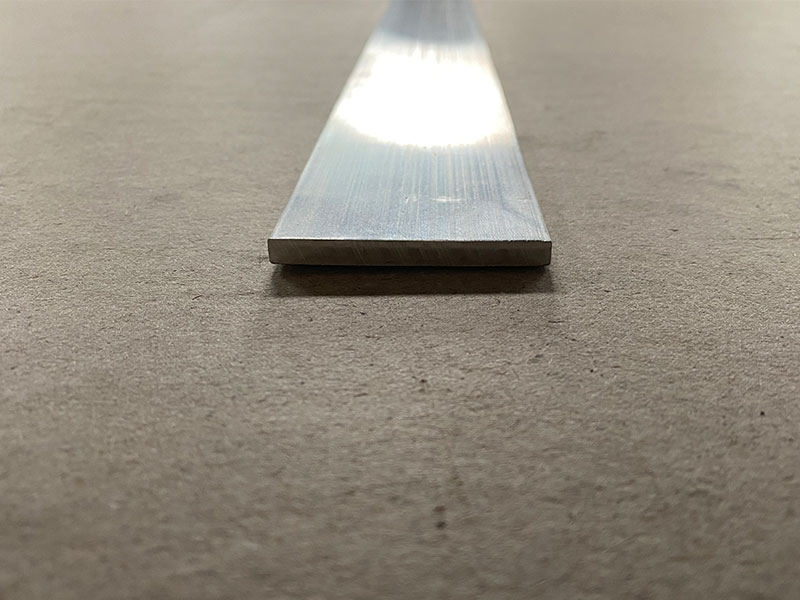
6082 aluminum flat bar is widely used for support strips, stiffening members, brackets, edge reinforcement, step frames, and fabricated mounting assemblies.
6082 aluminum square bar is useful where geometric stability, compact support sections, or machinable block-like forms are required.
Depending on the manufacturer and project specification, bars may be supplied in extruded, drawn, sawn, or precision-machined conditions, with size tolerances defined according to applicable standards.
Alloy Composition: The Chemistry Behind the Performance
The character of 6082 marine aluminum bar is rooted in its chemistry. This alloy belongs to the aluminum-magnesium-silicon family, with manganese added to improve strength and structural behavior. The result is a heat-treatable alloy known for a strong combination of mechanical performance and workable corrosion resistance.
Below is a typical chemical composition table for EN AW-6082 aluminum alloy.
| Element | Content (%) |
|---|---|
| Silicon (Si) | 0.70–1.30 |
| Iron (Fe) | 0.00–0.50 |
| Copper (Cu) | 0.00–0.10 |
| Manganese (Mn) | 0.40–1.00 |
| Magnesium (Mg) | 0.60–1.20 |
| Chromium (Cr) | 0.00–0.25 |
| Zinc (Zn) | 0.00–0.20 |
| Titanium (Ti) | 0.00–0.10 |
| Other elements, each | 0.00–0.05 |
| Other elements, total | 0.00–0.15 |
| Aluminum (Al) | Remainder |
This composition explains much of the alloy's practical behavior. Magnesium and silicon contribute to the formation of Mg2Si, which allows precipitation hardening and helps the alloy develop useful strength after heat treatment. Manganese supports microstructural control and can improve mechanical integrity. The controlled copper content helps maintain corrosion behavior suitable for marine-related use.
Mechanical Parameters Relevant to Marine Platform Construction
For platform engineers, chemistry matters because it leads to mechanical performance. The actual values depend on bar size, production route, and temper, but the following parameters are commonly referenced for 6082 aluminum bar.
| Property | 6082-T6 / 6082-T651 Typical Range |
|---|---|
| Density | 2.70 g/cm³ |
| Elastic Modulus | 69–71 GPa |
| Tensile Strength | 290–340 MPa |
| Yield Strength | 240–300 MPa |
| Elongation at Break | 8–12% |
| Brinell Hardness | 89–95 HB |
| Thermal Conductivity | 170–180 W/m·K |
| Electrical Conductivity | approx. 42–48% IACS |
| Melting Range | approx. 555–650°C |
These values show why 6082 is so attractive in structural marine applications. The density is low enough to support lightweight design, while the strength level is high enough to permit compact sections in many support and framing components. That means platform designers can often reduce handling weight during installation and still preserve structural confidence.
Temper Conditions and Their Role in Fabrication
One of the most important technical details in specifying 6082 marine aluminum bar is the temper condition. This is where many purchasing decisions either support the engineering goal-or quietly undermine it.
The temper is not a minor suffix attached to the alloy name. It defines how the material has been thermally and mechanically treated, and therefore influences strength, machining response, residual stress behavior, and downstream fabrication suitability.
Common tempers include the following:
6082-T6
Solution heat-treated and artificially aged. This is one of the most widely specified tempers for structural applications where higher mechanical strength is required. It offers an excellent strength-to-weight ratio and is commonly used for marine platform members, machined supports, and structural fittings.
6082-T651
This condition is similar to T6 but includes stress relief by stretching after solution treatment. It is especially useful for machined components where dimensional stability is important. In marine platform construction, T651 can be advantageous for precision parts that must retain geometry after machining.
6082-T4
Solution heat-treated and naturally aged. This temper has lower strength than T6, but can offer improved formability in some situations. It may be selected when fabrication sequences require additional shaping before final service use.
6082-O
Annealed condition. This is the softest state and is generally chosen when maximum formability is needed rather than high structural strength.
From a platform-builder's standpoint, T6 and T651 are the most commercially and structurally significant tempers. They align well with the demands of support bars, machined fittings, ladders, frames, and deck-related structural parts. However, if extensive welding is planned, engineers must account for localized strength reduction near welds, and the design should reflect the post-weld mechanical condition rather than only the base-metal temper.
Implementation Standards and Supply Specifications
For marine construction buyers, the value of 6082 aluminum bar is also shaped by compliance. Material consistency, dimensional tolerance, mechanical verification, and traceability are essential in marine projects, especially when bars are used in safety-related or load-bearing structures.
Common implementation and reference standards associated with 6082 aluminum bar include:
EN 573 for chemical composition and alloy designation of aluminum and aluminum alloys.
EN 755 for extruded rod, bar, tube, and profiles, covering mechanical properties and tolerances.
EN 485 for sheet and plate products, often referenced when a project includes mixed product forms using the same alloy family.
EN 515 for temper designation rules.
ASTM B221 for aluminum and aluminum-alloy extruded bars, rods, wire, profiles, and tubes.
ASTM B211 for aluminum and aluminum-alloy rolled or cold-finished bar, rod, and wire.
AMS specifications may also apply where aerospace-grade process discipline or higher documentation requirements intersect with specialized marine equipment manufacturing.
In practical procurement language, buyers may request the following supply conditions naturally within an order specification: alloy 6082, temper T6 or T651, bar form, diameter or section size, length tolerance, applicable standard, mechanical test requirement, surface quality requirement, and certification level such as EN 10204 3.1.
Surface Condition and Corrosion Considerations in Marine Service
There is a tendency in some discussions to oversimplify marine corrosion resistance, as though an alloy can simply be labeled "marine grade" and considered universally protected. A more useful perspective is that 6082 marine aluminum bar performs best when material choice and design detailing work together.
In marine platform construction, corrosion behavior is influenced by surface finish, water retention, crevice geometry, contact with dissimilar metals, and maintenance practices. 6082 can deliver strong service performance in many marine structures, but it benefits from smart engineering choices such as:
Clean, consistent surface finishing to minimize initiation sites for localized corrosion.
Drainage-friendly design that avoids stagnant seawater retention.
Electrical isolation from more noble metals to reduce galvanic corrosion risk.
Appropriate protective treatments such as anodizing, marine coatings, or conversion layers where required by service conditions.
Routine inspection in splash-prone or mechanically damaged zones.
This is particularly relevant for platforms located near harbors, offshore service stations, desalination facilities, passenger terminals, or floating operational structures. In such applications, the bar itself is only part of the durability equation; the surrounding assembly logic matters just as much.
Welding and Fabrication: Where Theory Meets the Workshop
A marine platform rarely remains a theoretical model for long. It must be cut, drilled, joined, lifted, transported, and installed. This is where 6082 aluminum bar proves its practicality.
The alloy responds well to machining, allowing manufacturers to produce detailed marine fittings with accurate geometry and repeatable quality. This is useful for bolted interface parts, modular platform connections, and custom marine access structures.
Welding is feasible and common, though designers should remember that the high-strength heat-treated condition of 6082 is partially altered in the heat-affected zone. In other words, the alloy is cooperative in fabrication, but it expects honesty in structural calculation. Responsible marine design does not ignore this metallurgical reality; it integrates it.
For many platform builders, this is not a disadvantage but an advantage. A material that is both weldable and strong enough for demanding structural use allows more flexible fabrication strategies than one that excels in only one category.
Typical Applications of 6082 Aluminum Bar in Marine Platforms
In real-world marine construction, 6082 bar often appears in places where the structure must do more than simply exist-it must transfer force, preserve alignment, and endure repeated service.
Typical uses include platform support members, gangway brackets, handrail supports, ladder components, deck-mounted mechanical interfaces, access system connectors, marine frame reinforcement, cleat supports, equipment mounting bars, and precision-machined structural accessories.
It is also suitable for offshore service walkways, marina platforms, coastal observation decks, maintenance structures, and industrial marine access systems where a combination of low weight and robust mechanical performance is essential.
A Material Choice That Supports Smarter Marine Engineering
From a distinctive viewpoint, the real value of 6082 marine aluminum bar is not that it solves every marine design challenge by itself. Its value is that it allows engineers to make better trade-offs. It helps translate the competing demands of strength, weight reduction, manufacturability, and durability into a practical construction material.
For marine platform design and construction, this alloy stands out when the project needs more than simple corrosion resistance. It becomes especially compelling when the design requires structural efficiency, clean machining, reliable supply in multiple bar forms, and compliance with recognized standards.
That is why 6082 remains an important option in the field of marine aluminum solutions. It gives marine builders a material that behaves intelligently under fabrication, supports efficient structural design, and performs with confidence in demanding coastal and offshore environments.
Choosing a Reliable 6082 Marine Aluminum Bar Supplier
The final performance of any marine platform begins with the quality of the supplied bar. A reliable supplier should offer stable alloy chemistry, verified mechanical properties, precise dimensional tolerances, documented temper condition, and marine-oriented quality control. Consistency from batch to batch matters, especially for projects involving modular construction or long service cycles.
For buyers seeking 6082 marine aluminum bar for marine platform design and construction, the best supply partner is one that understands more than the alloy code. They should understand how the material behaves in the marine world-how it is welded, machined, specified, certified, and ultimately trusted in service.
In the end, the sea does not reward vague material selection. It rewards clarity. And 6082 aluminum bar, when correctly specified and intelligently applied, offers exactly that: a clear, efficient, and technically sound path to stronger marine platforms.

Related Products
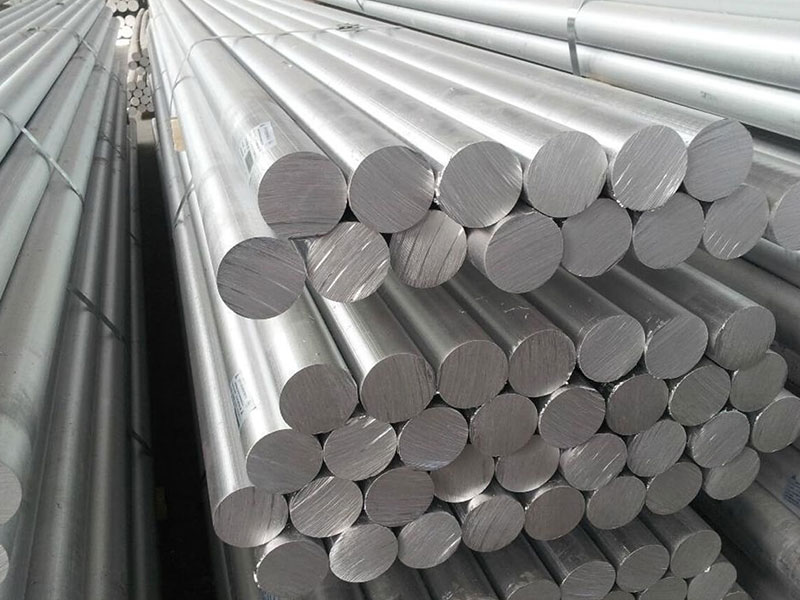
6082 marine aluminum rod & bar
6082 Aluminum Rods & Bars are extruded or rolled products manufactured from 6082 aluminum alloy — a thermally treated (typically T6 temper) aluminum-magnesium-silicon alloy that balances high tensile strength, good weldability, and excellent corrosion resistance.
View Details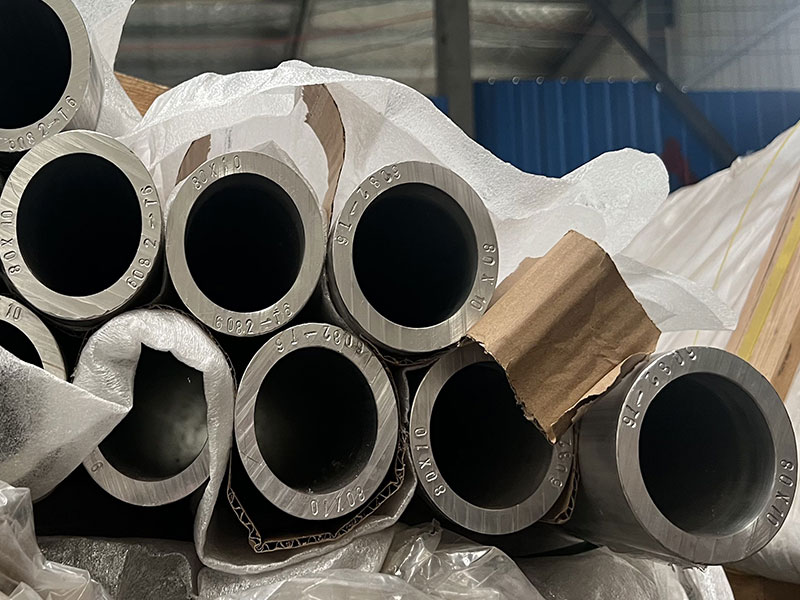
Marine aluminum hollow bars
Marine Grade Aluminum Hollow Bars are fabricated from high-quality alloys such as 5083, 5052, 6061, and 6082, all known for their exceptional resistance to seawater corrosion, salt spray, and marine atmospheres.
View Details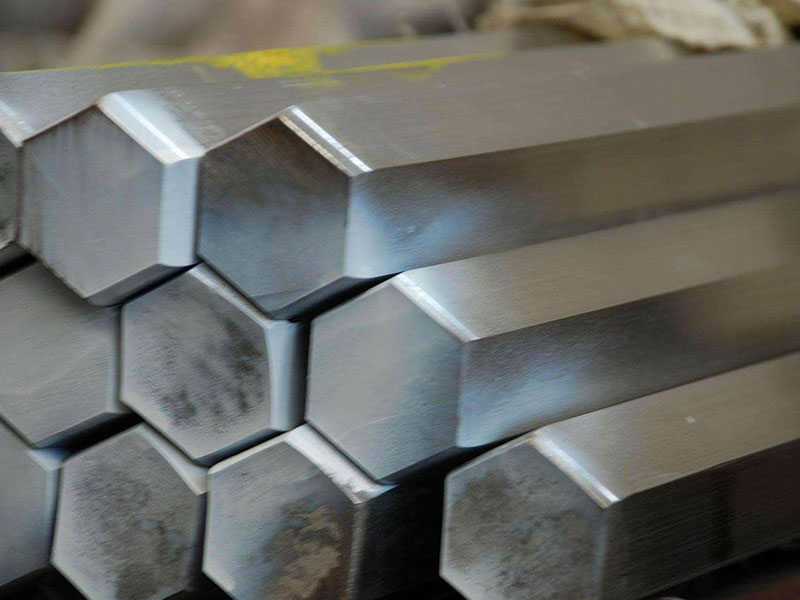
Marine aluminum hexagonal bars
Marine Grade Aluminum Hexagonal Bars are produced from premium corrosion-resistant aluminum alloys such as 5083, 5052, 6061, and 6082.
View Details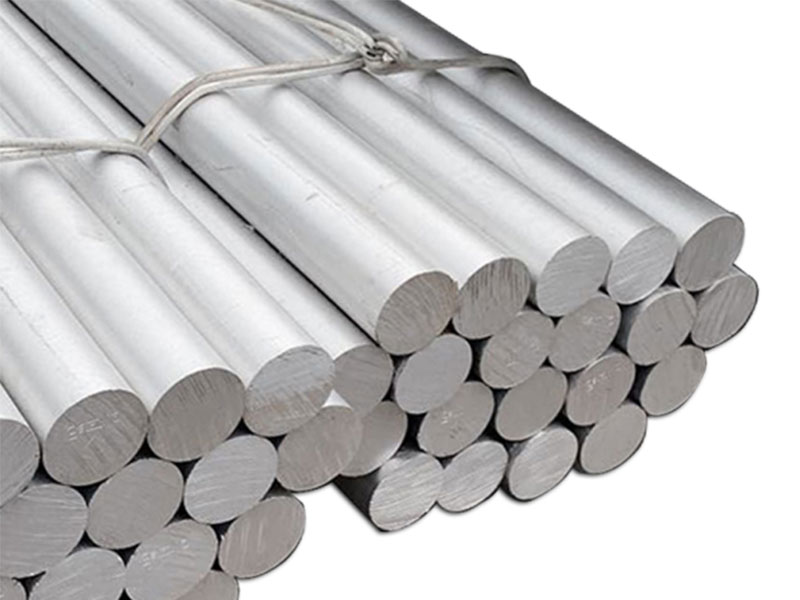
Marine grade aluminum solid bar
Marine Grade Aluminum Solid Bars are produced from premium aluminum alloys optimized for saltwater exposure, such as 5083, 5052, 6061, and 6082. These alloys offer unparalleled resistance to corrosion caused by seawater, salt spray, and marine atmospheres, while maintaining excellent mechanical strength and toughness.
View DetailsRelated Blog
6082 Marine Aluminum Bar for Industrial Marine Design and Construction
The 6082 marine aluminum bar is a medium‑strength, heat‑treatable wrought alloy designed for demanding marine and offshore environments. Combining good corrosion resistance, excellent machining performance, and reliable weldability, it.
View Details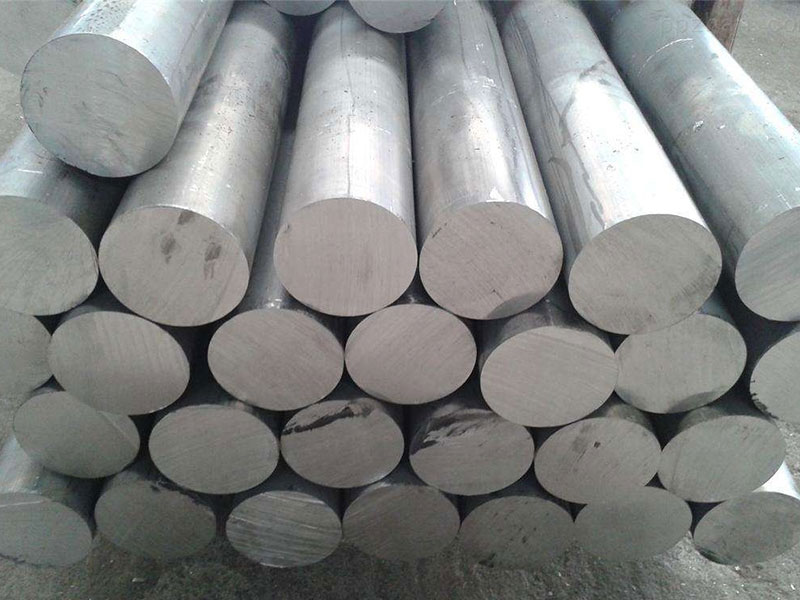
6082 Marine Aluminum Bar for Marine Platform Design and Construction
Marine platforms are often described in terms of scale, load, and durability. Yet from an engineering perspective, the real story begins much earlier-inside the material itself.
View Details
6082 Marine Grade Aluminum Solid Bar for Industrial Marine Equipment
6082 Marine Grade Aluminum Solid Bar for Industrial Marine Equipment: The "Quiet Backbone" of Reliable SystemsIndustrial marine equipment rarely fails because of one dramatic overload.
View Details
6082 Marine Aluminum Hollow Bars for Boat Hull and Deck Strengthening
6082 Marine Aluminum Hollow Bars for Boat Hull and Deck StrengtheningIn modern boatbuilding, strength is no longer measured only by how thick a plate looks or how heavy a frame feels.
View Details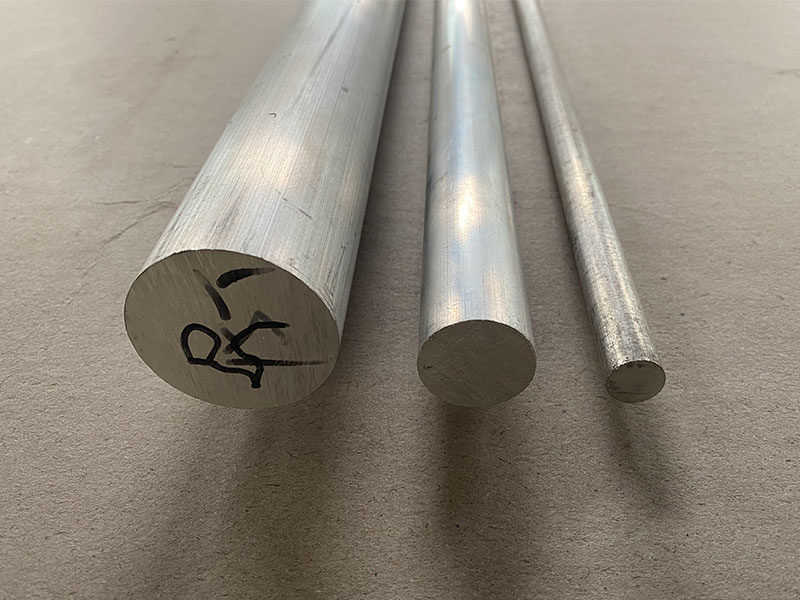
6082 Marine Grade Aluminum Solid Bar for High Performance Ship Design
In the world of high-performance shipbuilding, selecting materials that combine strength, durability, corrosion resistance, and ease of fabrication is crucial.
View Details
6082 Marine Aluminum Bar for High Strength Marine Components
In the demanding world of marine engineering, the choice of materials defines not only the longevity but also the safety and performance of vessels. Among the plethora of metal options.
View Details
Leave a Message