
Alloy 3003 H12 Aluminum Plate for boat hulls
Alloy 3003 H12 Aluminum Plate for Boat Hulls: A "Quiet Workhorse" Approach to Hull Reliability
When people talk about aluminum boat hulls, the spotlight often lands on high-magnesium marine grades such as 5083 or 5086. Yet in many real-world boats and work platforms, performance is not only about extreme strength-it's about stable forming, predictable corrosion behavior in mixed environments, low-maintenance service, and fabrication speed. From that practical viewpoint, Alloy 3003 H12 aluminum plate can be understood as a "quiet workhorse" material: not the loudest performer on paper, but a dependable choice for certain hull structures, small craft components, and auxiliary marine applications where forming and corrosion resistance matter as much as raw tensile numbers.
What 3003 H12 Really Means for a Boat Hull Context
3003 is an aluminum-manganese alloy in the 3xxx series. Its identity is defined less by high strength and more by excellent formability, good general corrosion resistance, and easy fabrication. The manganese addition improves strength modestly compared with commercially pure aluminum, while keeping the alloy friendly to rolling, bending, and shaping-features that matter when hull geometry, chines, spray rails, and internal liners must be produced efficiently.
H12 temper signals a controlled amount of strain hardening. In plain terms, the plate is work-hardened to roughly one-quarter hard condition. For marine fabrication, that's a useful middle ground: stronger and more dent-resistant than fully annealed material, while still easier to form than harder tempers. This balance often reduces fabrication time and helps maintain dimensional accuracy during bending and forming operations.
Functions on Boats: Where 3003 H12 Adds Value
Thinking function-first helps clarify where 3003 H12 fits in boat hull ecosystems.
Form-driven hull features and transitions
Some hull designs include complex curvature or require plates that respond predictably to press forming or rolling. 3003 H12's forming response can be an advantage for shaping panels, knuckles, and transitions without excessive cracking risk or springback headaches.
Corrosion resistance in mixed exposure
While it is not a "marine alloy" in the strict 5xxx sense, 3003 generally performs well in many environments, especially when paired with sensible coatings, isolation from dissimilar metals, and good drainage design. It is often selected where the hull or hull-adjacent structures see intermittent wetting, freshwater, brackish splash, or condensation rather than continuous immersion in harsh seawater.
Weight efficiency with fabrication speed
For builders aiming to keep weight down while accelerating fabrication, 3003 H12 can be cut, formed, and welded with relative ease. It's especially practical in boats that are produced in batches and benefit from repeatable shop-floor outcomes.
Practical Applications: Where It's Commonly Used
3003 H12 aluminum plate is frequently considered for:
- Small boat hull plating in freshwater or mixed-use conditions, especially where forming complexity is moderate and protective coatings are planned
- Deck plates, lockers, console skins, bulkhead liners, and interior structural partitions where corrosion resistance and bendability matter
- Splash-zone panels, interior bilge covers, tank compartments (with proper design and coating systems)
- Support panels and protective cladding around equipment where impact resistance and easy replacement are valued
For fully seawater-immersed hulls or high-speed impact applications, designers often prefer higher-strength marine grades. Still, for many practical hull-adjacent uses, 3003 H12 remains a smart, economical, fabrication-friendly plate.
Typical Parameters and Properties (Quick-Read)
Below are representative parameters commonly referenced in procurement and engineering discussions. Exact values depend on thickness and applicable standards.
Common thickness range: 1.5 mm to 25 mm (availability varies by mill)
Typical width/length: cut-to-size or standard mill formats (e.g., 1000–2000 mm wide; 2000–6000 mm long)
Density: about 2.73 g/cm³
Thermal conductivity: good (useful around heat-affected areas and for temperature stability)
Electrical conductivity: moderate (not a primary selection factor for hulls)
Mechanical properties (typical, plate form, H12):
- Tensile strength: about 130–180 MPa
- Yield strength: about 85–140 MPa
- Elongation: about 6–20% (varies strongly with thickness and processing)
These values highlight the "balanced" profile: workable strength with generous forming capacity.
Standards and Implementation Notes (What Buyers Usually Ask For)
Depending on the region and supply chain, 3003 H12 plate is commonly supplied to one or more of the following references:
- ASTM B209 / B209M: Aluminum and aluminum-alloy sheet and plate
- EN 485 (series): Aluminum and aluminum alloys for sheet/strip/plate (mechanical properties and tolerances)
- JIS H4000 / JIS H4040 family: Japanese Industrial Standards for aluminum alloys (often used in Asia)
In a marine build, buyers often specify not only the alloy and temper, but also flatness, tolerances, surface condition, and inspection documentation such as mill test certificates. If the plate will be painted or anodized, surface quality expectations should be stated up front to avoid rework.
Tempering and Fabrication Behavior in the Shop
H12 strain-hardened condition tends to:
- Bend more reliably than harder tempers while maintaining better rigidity than O temper
- Reduce "oil canning" tendencies compared with very soft sheet in some applications
- Respond well to common cutting methods such as shearing, sawing, and CNC routing (tooling depends on thickness)
Welding considerations
3003 is weldable using common aluminum welding methods. As with most aluminum alloys, the heat-affected zone will soften relative to the base metal due to annealing effects. In hull-related assemblies, that means joint design, weld sequencing, and distortion control matter more than chasing peak base-metal strength.
Galvanic isolation
In boatbuilding, the corrosion story is often less about the alloy and more about the system. If 3003 interfaces with stainless fasteners, copper-bearing alloys, or carbon steel, isolation washers, sealants, and coatings can dramatically improve long-term durability.
Chemical Composition (Typical) Table
The table below reflects commonly cited composition limits for Aluminum Alloy 3003. Exact limits can vary slightly by standard; procurement should reference the chosen specification.
| Element | Typical Limit / Range (wt. %) |
|---|---|
| Silicon (Si) | up to 0.60 |
| Iron (Fe) | up to 0.70 |
| Copper (Cu) | 0.05–0.20 |
| Manganese (Mn) | 1.00–1.50 |
| Zinc (Zn) | up to 0.10 |
| Others (each) | up to 0.05 |
| Others (total) | up to 0.15 |
| Aluminum (Al) | Remainder |
Manganese is the signature here, supporting strength while preserving the alloy's forming-friendly personality.
A Distinctive Takeaway: 3003 H12 as a Hull "Process Optimizer"
A useful way to view 3003 H12 aluminum plate for boat hulls is not as a brute-force structural champion, but as a process optimizer. It supports clean forming, predictable fabrication, and stable service performance when the design environment fits its strengths. In builds where speed, shape, and corrosion management are the priorities-and where smart coatings and isolation practices are part of the plan-3003 H12 can provide a practical, cost-efficient path to durable marine structures.

Related Products
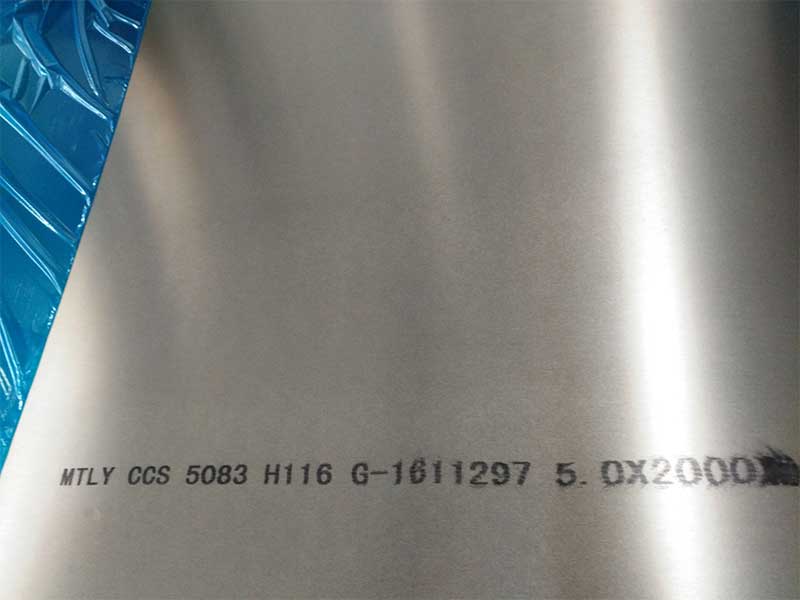
Marine 5083 aluminum plate
Marine 5083 Aluminum Plate belongs to the 5xxx series of aluminum-magnesium alloys and is classified as a non-heat-treatable alloy. Its high magnesium content (typically 4.0–4.9%) enhances its corrosion resistance, especially against seawater-related degradation such as pitting and stress corrosion cracking.
View Details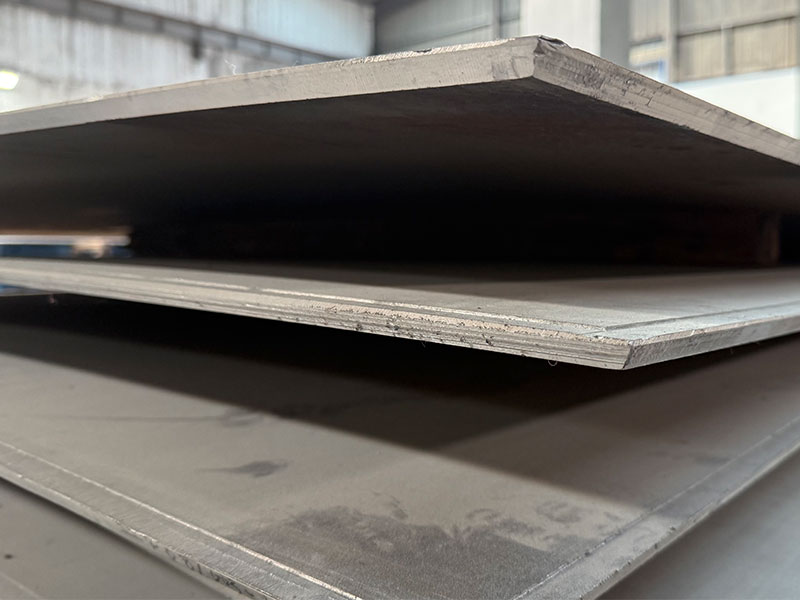
Marine aluminum steel clad plate
Aluminum / Steel Clad Plates consist of a sandwich construction in which a layer of marine-grade aluminum alloy is metallurgically bonded to a steel substrate.
View Details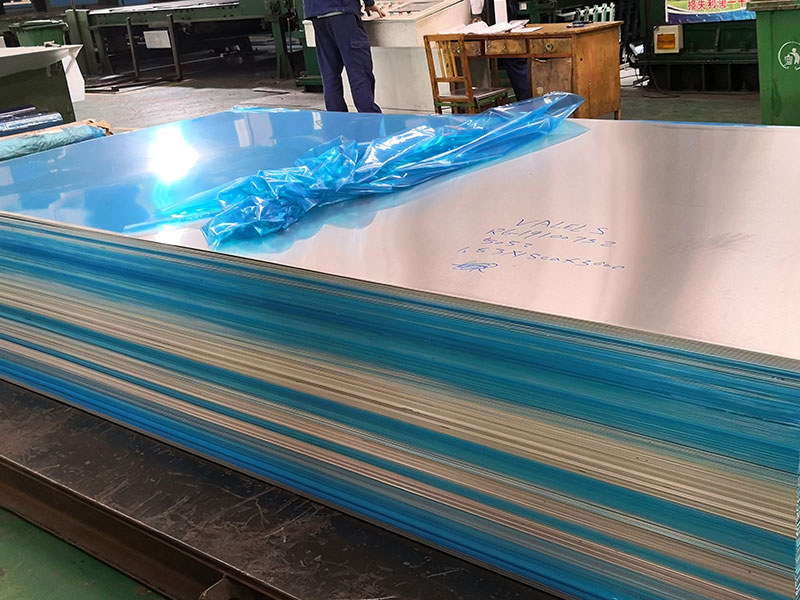
Marine 5059 aluminum plate
Marine 5059 Aluminum Plate is distinguished by its high magnesium content and carefully balanced alloying elements, designed to maximize strength without compromising corrosion resistance.
View Details
Marine 5086 aluminum plate
5086 Aluminum Plate belongs to the 5xxx series of aluminum-magnesium alloys. Its hallmark is a high magnesium content—generally between 4.0% and 4.9%—which delivers enhanced corrosion resistance, particularly against saltwater and marine atmospheric conditions.
View Details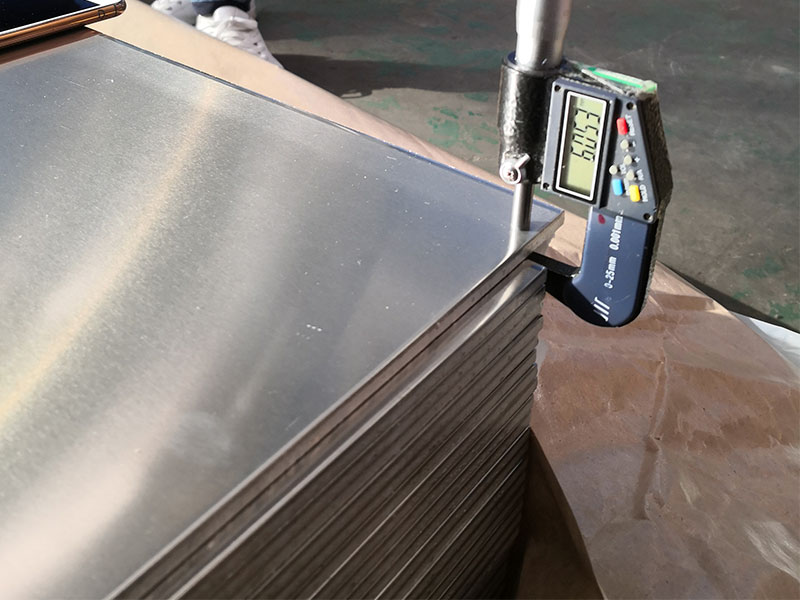
Marine 5383 aluminum plate
The 5383 aluminum alloy belongs to the 5xxx series of aluminum-magnesium alloys known for remarkable resistance to marine corrosion and high strength.
View Details
Marine heavy duty aluminum plate
Marine Heavy Duty Aluminum Plates Sheets generally refer to thick aluminum alloy plates and heavy gauge sheets produced from marine-grade alloys such as 5083, 5086, 5059, and 5383.
View DetailsRelated Blog
Alloy 3003 H12 Aluminum Plate for boat hulls
Alloy 3003 H12 Aluminum Plate for Boat Hulls: A "Quiet Workhorse" Approach to Hull ReliabilityWhen people talk about aluminum boat hulls, the spotlight often lands on high-magnesium marine grades such as 5083 or 5086.
View Details
Leave a Message