
6061 Marine Aluminum Hollow Bars for Custom Marine Platform Solutions
6061 Marine aluminum hollow bars for Custom Marine Platform Solutions: The "Quiet Engineering" Inside Every Deck, Frame, and Walkway
When people picture a marine platform, they usually see the surface: the deck plates, the railings, the tidy weld beads, the clean lines that make a structure look "seaworthy." The real performance, however, often lives inside the structure-literally. 6061 Marine aluminum hollow bars act like the platform's internal architecture, delivering stiffness, fatigue resistance, and corrosion performance while keeping weight under control. In custom marine platform solutions-service decks, inspection walkways, equipment skids, dive platforms, modular pontoons, research catwalks-6061 hollow bars are where practicality meets precision.
Why Hollow Bars Change the Game in Marine Platform Design
A hollow bar is not only a lighter alternative to solid stock. In marine fabrication, it behaves like a stiffness reservoir: you get excellent bending resistance relative to mass, plus geometry that's friendly to modular builds and internal routing.
In custom platform structures, hollow bars offer real advantages:
Strength-to-weight efficiency for long spans
Reducing mass matters at sea. Lighter platforms are easier to install, reduce vessel trim impact, and can increase payload flexibility. Hollow bars bring stiffness with less weight than comparable solid bars, helping manage deflection in gangways, frames, and elevated equipment supports.
Better torsional behavior in rail frames and rectangular modules
Hollow sections resist twisting well. This is useful when platforms see asymmetric loading-people moving, shifting gear, wave action, or equipment torque.
Cleaner integration for cable runs and drainage strategies
Hollow profiles allow concealed routing and controlled drain holes without bulky add-ons. In platform retrofits, the ability to hide and protect lines is a practical performance feature.
Predictable welding outcomes in 6061
6061 is a workhorse alloy for marine structures because it welds reliably and is widely available. Hollow bars made from 6061 are commonly fabricated with TIG or MIG for frames and support grids.
In saltwater environments, many engineers immediately think of 5xxx-series (like 5083 or 5052) for corrosion resistance. Yet 6061 marine aluminum remains a preferred choice in custom platforms because it balances:
- Structural strength in heat-treated tempers
- Machinability for custom brackets, sockets, and joint details
- Availability in a broad range of extruded profiles and hollow bars
- Weldability for modular builds and field repairs
The trade-off is important to understand from a design standpoint: 6061 gains its strength from heat treatment, and welding locally reduces strength in the heat-affected zone. A good marine platform design treats this not as a weakness, but as a known engineering condition-addressed through joint design, gusseting, proper filler selection, and realistic allowable stresses.
Typical Applications of 6061 Marine aluminum hollow bars in Custom Platforms
Custom marine platforms are rarely "one-size-fits-all." Hollow bars in 6061 are commonly chosen for:
- Load-bearing frames for modular deck panels
- Outrigger-style extensions and service platforms
- Ladder frames, handrail posts, and stanchion supports
- Equipment skids for pumps, winches, small cranes, and sensors
- Under-deck stiffeners where minimizing snag points matters
- Floating dock subframes and pontoon platform skeletons
A useful way to think about it: hollow bars convert material into structure efficiently, allowing designers to spend aluminum where it adds stiffness rather than where it only adds mass.
Parameters: What Buyers and Fabricators Actually Specify
In procurement and fabrication, "6061 hollow bar" is only the beginning. Practical specifications tend to include these parameter categories, integrated into drawings and purchase orders:
Alloy and temper
Most marine platform structures use 6061-T6 or 6061-T651 for strength, while 6061-T4 or 6061-T52 can appear where forming is needed before final strengthening. For welded frames, designers often accept that local strength near welds will be lower than T6 base metal.
Section type and dimensions
"Hollow bar" is often used to describe rectangular hollow sections, square tubes, or thick-wall hollow extrusions used as structural members. Common parameters include:
- Outside width and height
- Wall thickness
- Corner radius requirements (especially for fit-up and fatigue detail)
- Straightness and twist tolerances for long platform runs
Length, cut tolerance, and end condition
Marine builds frequently benefit from pre-cut lengths to reduce shop time, especially for modular platforms with repeated bays. Requirements can include saw-cut squareness and deburring.
Surface and corrosion protection expectations
6061 is frequently paired with finishing systems such as:
- Anodizing for cosmetic and light-duty exposure
- Marine coatings where galvanic contact is expected
- Isolation strategies (gaskets, sleeves, barrier tapes) when joining to stainless steel or carbon steel
Mechanical property expectations
For structural design, properties like tensile strength, yield strength, elongation, and hardness are often referenced by temper and standard.
Implementation Standards Commonly Used for 6061 Hollow Bars in Marine Platforms
Custom marine platform solutions often touch multiple compliance paths: material quality, welding integrity, and dimensional consistency. These are widely used standards in the aluminum supply and fabrication chain:
ASTM B221 for extruded aluminum bars, rods, wire, profiles, and tubes
This is a common baseline for 6061 extrusions and hollow sections, covering chemical composition, mechanical properties by temper, and dimensional tolerances.
AWS D1.2/D1.2M Structural Welding Code – Aluminum
For welded platform frames, this is a reference for welding procedures, welder qualification, workmanship, and inspection considerations specific to aluminum.
ISO 9001 quality systems
Not a material spec, but frequently required for traceability, consistency, and documentation control.
Depending on the project type-passenger access systems, offshore equipment supports, research platforms-additional standards may be referenced by the end user, but the three above are common anchors for marine aluminum platform work.
Alloy Tempering and Condition: What the Temper Really Means on a Platform
6061's temper is more than a label; it's a promise about how the alloy was processed.
6061-T6
Solution heat-treated and artificially aged. This is the go-to temper for strong, stiff structural members in marine frames. It's ideal when you want maximum base-metal strength and good machinability.
6061-T651
T6 plus stress-relieving by stretching. This is valuable when straightness, stability, and reduced residual stress matter-useful for long members that must stay true after machining or fit-up.
6061-T4
Solution heat-treated and naturally aged. This is chosen when forming or adjustment is needed before final assembly. It's less strong than T6 but can be easier to work in certain fabrication steps.
Welded condition reality check
In platform fabrication, welding locally over-ages or anneals the material near the joint, reducing strength compared with T6 base metal. A "distinctive viewpoint" here is to treat the weld zone as a designed gradient, not a defect: increase section locally, use gussets, avoid sharp notches, and design load paths so the highest stress isn't concentrated in the softened zone.
Corrosion and Compatibility: 6061 in Seawater Is a System, Not a Single Material
6061 has good general corrosion resistance, but marine exposure is rarely "pure seawater." It includes dissimilar metals, crevices, trapped salts, and cyclic wet/dry conditions.
practices that make 6061 hollow bars thrive in platforms include:
- Avoiding stagnant crevices by providing drain paths and breathable joints
- Isolating stainless fasteners and fittings with washers/sleeves to reduce galvanic coupling
- Specifying appropriate coatings or anodize when aesthetics and long-term exposure demand it
- Designing for rinsing and inspection, since platforms often see abrasive salts and biofouling
In other words: the "marine" in marine aluminum is as much about detail design as it is about alloy selection.
Chemical Composition of Aluminum Alloy 6061 (Typical Specification Limits)
Below is a commonly used chemical composition table for AA 6061, expressed in weight percent, aligned with typical specification ranges used in standards such as ASTM and AA requirements. Always confirm exact limits against the governing purchase specification and mill test certificate.
| Element | Composition (wt. %) |
|---|---|
| Silicon (Si) | 0.40–0.80 |
| Iron (Fe) | 0.00–0.70 |
| Copper (Cu) | 0.15–0.40 |
| Manganese (Mn) | 0.00–0.15 |
| Magnesium (Mg) | 0.80–1.20 |
| Chromium (Cr) | 0.04–0.35 |
| Zinc (Zn) | 0.00–0.25 |
| Titanium (Ti) | 0.00–0.15 |
| Other, each | 0.00–0.05 |
| Other, total | 0.00–0.15 |
| Aluminum (Al) | Remainder |
From a performance standpoint, the Mg and Si content is what enables 6061's heat-treatable strengthening (forming Mg₂Si), while controlled amounts of Cu and Cr contribute to strength and microstructural stability.
Practical Mechanical Expectations for 6061 Hollow Bars (Temper-Dependent)
Mechanical properties depend on temper, section thickness, and specification. For marine platform discussions, designers often reference typical values for 6061-T6/T651, such as:
- Ultimate tensile strength in the range of roughly 290 MPa class
- Yield strength in the range of roughly 240 MPa class
- Good machinability and stable dimensional performance in T651
If your platform is weld-dominant, the meaningful "design property" is frequently governed by the welded joint region rather than the base metal alone-this is why weld procedure control and joint detailing are critical in marine hollow bar frames.
Fabrication Notes That Matter Specifically for Hollow Bars
Hollow bars introduce fabrication opportunities and constraints that solid bars don't:
Weld sequencing and distortion control
Thin-to-moderate wall hollow sections can move with heat. Good tack strategy, alternating weld passes, and fixture control help preserve squareness and reduce rework.
End sealing and internal corrosion management
If ends are sealed, moisture entrapment can become a long-term risk. Many marine fabricators either fully seal with controlled venting strategy or keep sections open and drainable, depending on environment and cleaning routines.
Machined interfaces
6061-T651 is widely chosen when hollow bars interface with machined sockets, flanges, or precision mounting plates-common in sensor platforms or equipment skids.
Why 6061 Marine aluminum hollow bars Are a Smart Choice for Custom Platform Solutions
Custom marine platforms succeed when structure, fabrication, and service life align. 6061 aluminum hollow bars sit at that intersection: light enough to keep installations efficient, strong enough (in the right temper) for structural frames, and adaptable enough for custom modules, repairs, and upgrades.
When specified with clear parameters, tied to recognized standards like ASTM B221 and welded under AWS D1.2, 6061 hollow bars become more than a commodity profile. They become the hidden framework that makes a platform feel solid underfoot-quiet engineering that holds up to wave cycles, payload changes, and the long patience of salt air.

Related Products
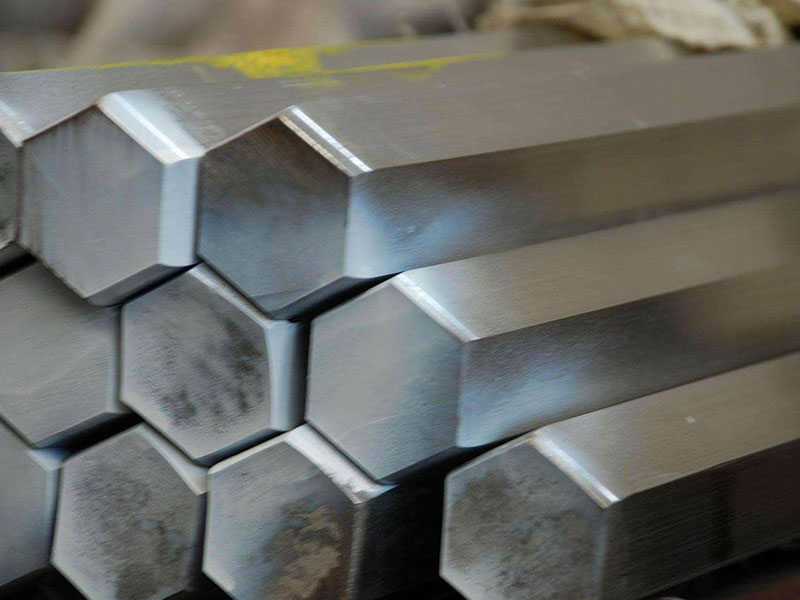
Marine aluminum hexagonal bars
Marine Grade Aluminum Hexagonal Bars are produced from premium corrosion-resistant aluminum alloys such as 5083, 5052, 6061, and 6082.
View Details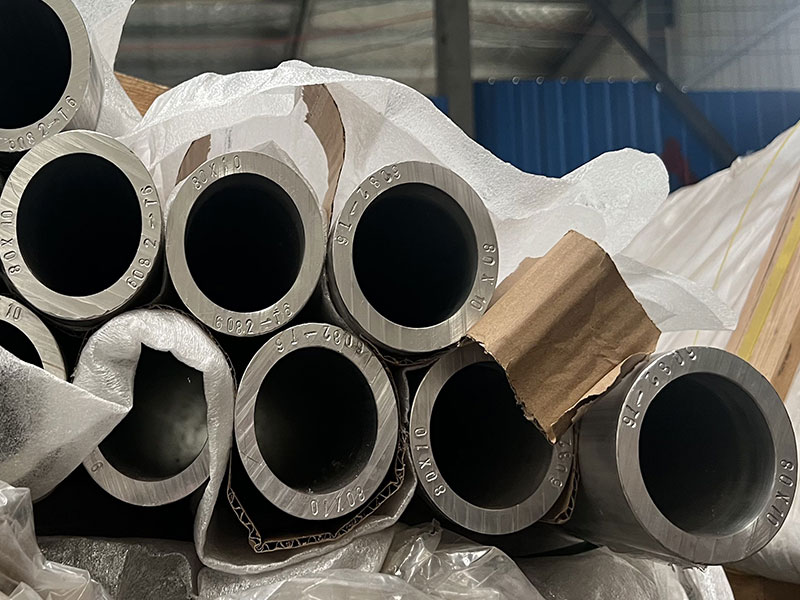
Marine aluminum hollow bars
Marine Grade Aluminum Hollow Bars are fabricated from high-quality alloys such as 5083, 5052, 6061, and 6082, all known for their exceptional resistance to seawater corrosion, salt spray, and marine atmospheres.
View Details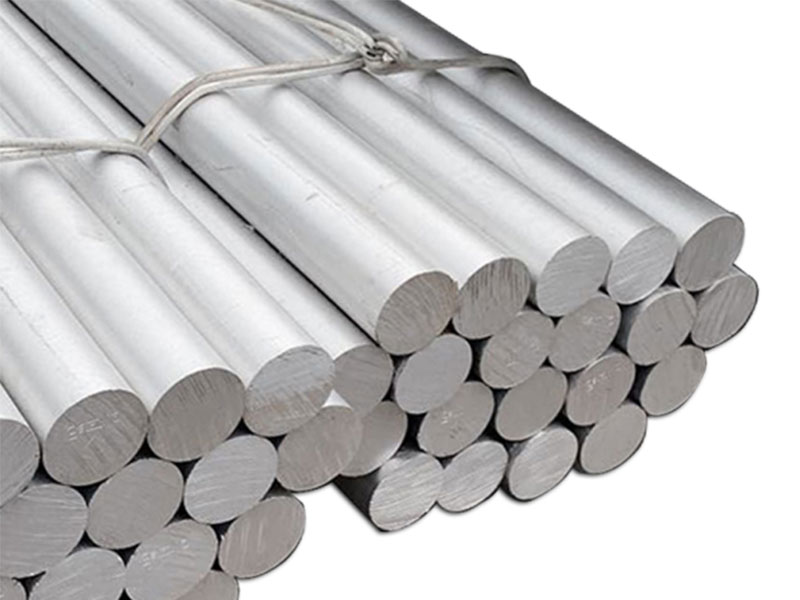
Marine grade aluminum solid bar
Marine Grade Aluminum Solid Bars are produced from premium aluminum alloys optimized for saltwater exposure, such as 5083, 5052, 6061, and 6082. These alloys offer unparalleled resistance to corrosion caused by seawater, salt spray, and marine atmospheres, while maintaining excellent mechanical strength and toughness.
View Details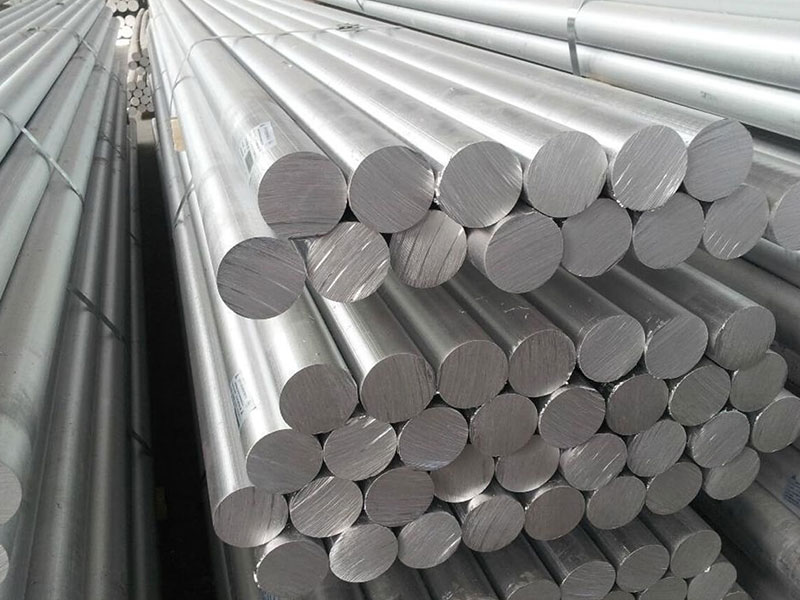
6082 marine aluminum rod & bar
6082 Aluminum Rods & Bars are extruded or rolled products manufactured from 6082 aluminum alloy — a thermally treated (typically T6 temper) aluminum-magnesium-silicon alloy that balances high tensile strength, good weldability, and excellent corrosion resistance.
View DetailsRelated Blog
6061 Marine Aluminum Hexagonal Bars for Corrosion Resistant Marine Applications
6061 Marine Aluminum Hexagonal Bars for Corrosion Resistant Marine Applications: Unveiling the Technical Backbone of Modern Maritime EngineeringIn the demanding world of marine engineering.
View Details
6061 Marine Aluminum Hexagonal Bars for Lightweight Marine Frame Construction
In the ever-evolving marine industry, choosing the correct material for frame construction is a critical factor influencing performance, durability, and safety. Among these materials.
View Details
6061 Marine Aluminum Hollow Bars for Custom Marine Platform Solutions
6061 Marine Aluminum Hollow Bars for Custom Marine Platform Solutions: The "Quiet Engineering" Inside Every Deck, Frame, and WalkwayWhen people picture a marine platform, they usually see the surface: the deck plates, the railings, the tidy weld beads.
View Details
6061 Marine Grade Aluminum Solid Bar for Boat Hull and Deck Strengthening
When it comes to constructing or reinforcing boats, durability, strength, and corrosion resistance are non-negotiable attributes. Among the available materials in marine applications.
View Details
6061 Marine Aluminum Hollow Bars for Custom Boat Hull Parts
6061 Marine Aluminum Hollow Bars are a popular choice in the marine industry, recognized for their excellent mechanical properties and corrosion resistance. This specific alloy provides the ideal balance of strength and lightweight construction.
View Details
6061 Marine Aluminum Hexagonal Bars for Boat Hull and Frame Assembly
6061 Marine Aluminum Hexagonal Bars are engineered to deliver exceptional strength, corrosion resistance, and machinability for marine applications. Used widely in boat hull and frame assembly.
View Details
Leave a Message