
Marine Aluminum Alloy Plate 5052 H112
Marine Aluminum Alloy Plate 5052 H112: The "Quiet Performer" Behind Reliable Boats and Coastal Equipment
In marine engineering, the materials that get the most attention are often the flashy ones: ultra-high-strength alloys, exotic composites, or heavily branded steels. Yet many of the world's most dependable boats, gangways, tank components, and coastal structures are built on a far more practical hero-Marine Aluminum Alloy Plate 5052 H112. Its value comes from something shipbuilders appreciate more than novelty: predictable fabrication, stable corrosion behavior in salty environments, and a mechanical profile that supports real-world service without drama.
5052 is not the strongest aluminum alloy, and it doesn't try to be. Its advantage is that it behaves like a cooperative teammate across cutting, forming, welding, and long-term exposure-especially where seawater spray and humid coastal air would punish less balanced materials.
A distinctive way to understand 5052 H112: "form-first marine strength"
A useful way to frame 5052 H112 is form-first marine strength. Many marine parts are not just flat plates; they become curved hull panels, folded brackets, shaped covers, and welded enclosures. A material that cracks during forming or becomes unreliable after welding can quietly add cost and risk.
5052 is an Al-Mg (aluminum–magnesium) alloy. Magnesium contributes meaningful strength while retaining good ductility, and it also supports corrosion resistance when the alloy is correctly processed. In practical shop terms, 5052 plate is often selected because it can be formed and welded with less "argument" than harder, heat-treatable grades.
The H112 temper adds another layer to this story. H112 generally indicates the plate has received some level of strain hardening from processing (such as rolling), but it is not pushed into a tightly controlled high-strength condition. For many marine fabricators, that translates to stable workability and consistent performance across plate thicknesses, especially in medium-to-thick plate where extreme tempers may be less uniform.
What it does well in marine environments
Corrosion resistance in salt-exposed service
5052 is widely recognized for its resistance to marine atmospheres. It performs well in splash zones and on-deck applications where salt deposits and cyclic wet/dry conditions are common. For many coastal products, the goal is not "never corrodes," but "corrodes slowly, predictably, and can be protected easily." 5052 supports that strategy well.
Weldability that supports production speed
Marine fabrication is often weld-intensive. 5052 typically welds cleanly with common marine welding methods, and it is frequently paired with appropriate filler metals based on design requirements. The ability to weld without chasing cracks or strange heat-affected behavior is a reason it shows up in real production yards.
Formability for hull-related geometry and enclosure work
From bent rub rails to curved panels and stiffened structures, 5052's forming behavior is a practical advantage. Even when strength is "moderate," the finished geometry often contributes stiffness and durability.
Typical applications: where 5052 H112 earns its keep
Marine Aluminum Alloy Plate 5052 H112 commonly appears in parts where corrosion resistance and fabrication efficiency matter more than maximum tensile strength.
Common marine and coastal uses include:
- Small craft and workboat components such as deck plates, covers, interior partitions, and non-critical hull fittings
- Gangways, walkways, ladder components, and access platforms in coastal facilities
- Cabin panels, console structures, equipment housings, and protective guards
- Tanks and containment-related panels for water and certain compatible chemicals, when designed appropriately
- General marine sheet-metal fabrication where forming and welding are the main operations
In many projects, 5052 H112 becomes the "default good choice" for salt-adjacent structures-especially when the design leans on geometry, welding, and corrosion control rather than brute-force strength.
Technical profile customers usually want, explained plainly
5052 is not heat-treatable in the same way as 6xxx or 7xxx alloys. That means you don't "solve" strength with heat treatment after fabrication. Instead, strength is primarily influenced by composition and work hardening (the H temper system).
H112 is often used when you want:
- Reliable, not overly stiff forming response
- Good ductility for fabrication
- Practical mechanical strength for marine structures that are not highly loaded
- A temper that is common in plate supply for marine-related thickness ranges
Typical parameters for Marine Aluminum Alloy Plate 5052 H112
Actual values vary by standard, thickness, and supplier capabilities, but the following ranges are commonly referenced for quick engineering orientation.
Physical properties (typical)
- Density: about 2.68 g/cm³
- Melting range: about 607–649°C
- Thermal conductivity: about 130–140 W/m·K (temper-dependent)
- Electrical conductivity: moderate for aluminum alloys (varies with temper and processing)
Mechanical properties (typical, for reference)
- Tensile strength: commonly around 160–230 MPa
- Yield strength: commonly around 70–140 MPa
- Elongation: often around 10–25% depending on thickness and processing
Because H112 is a production-oriented temper, the most dependable approach is to confirm the mill test certificate for the ordered thickness and standard.
Implementation standards and common compliance routes
Marine and industrial buyers typically encounter 5052 plate supplied under widely used standards. Availability depends on region and project requirements.
Common standards include:
- ASTM B209 for aluminum and aluminum-alloy sheet and plate
- EN 485 series for European mechanical properties and tolerances for wrought aluminum products
- JIS H4000 / JIS H4040 series in Japanese supply chains (depending on product form)
If your project is class-sensitive or inspection-driven, ask for documentation such as chemical analysis, mechanical test results, and dimensional tolerances aligned to your purchasing spec.
Alloy tempering and condition notes: what "H112" implies in practice
H112 is used for wrought products that receive some amount of strain hardening through processing, but without the tight property controls associated with more defined H tempers. In real purchasing terms, it's often chosen for plate where:
- You want consistent fabrication behavior across batches
- The design is not pushing the alloy near its strength ceiling
- You prefer a "marine-fabrication friendly" condition rather than maximum hardness
If you need more defined minimum mechanical properties, buyers sometimes compare H112 with H32/H34 conditions depending on thickness availability and forming needs.
Chemical composition table (5052 aluminum alloy, typical limits)
Below is a commonly referenced composition range for AA 5052. Always confirm with the applicable standard and mill certificate for your order.
| Element | Composition (wt.%) |
|---|---|
| Magnesium (Mg) | 2.2–2.8 |
| Chromium (Cr) | 0.15–0.35 |
| Silicon (Si) | ≤ 0.25 |
| Iron (Fe) | ≤ 0.40 |
| Copper (Cu) | ≤ 0.10 |
| Manganese (Mn) | ≤ 0.10 |
| Zinc (Zn) | ≤ 0.10 |
| Titanium (Ti) | ≤ 0.10 |
| Aluminum (Al) | Balance |
This chemistry is a big part of why 5052 behaves so well: magnesium supports strength and corrosion performance, while controlled impurity limits help maintain stability during fabrication and service.
Buying insight: how to specify it for fewer surprises
For a smooth procurement and fabrication experience, buyers often specify:
- Alloy: AA 5052
- Temper: H112
- Standard: ASTM B209 (or EN/JIS equivalent)
- Dimensions: thickness, width, length, tolerances
- Documentation: mill test certificate including chemistry and mechanicals
- Surface/finish requirements if the plate will be anodized, painted, or used as-is
The takeaway

Related Products
Marine 5059 aluminum plate
Marine 5059 Aluminum Plate is distinguished by its high magnesium content and carefully balanced alloying elements, designed to maximize strength without compromising corrosion resistance.
View Details
Marine heavy duty aluminum plate
Marine Heavy Duty Aluminum Plates Sheets generally refer to thick aluminum alloy plates and heavy gauge sheets produced from marine-grade alloys such as 5083, 5086, 5059, and 5383.
View Details
Marine 5383 aluminum plate
The 5383 aluminum alloy belongs to the 5xxx series of aluminum-magnesium alloys known for remarkable resistance to marine corrosion and high strength.
View Details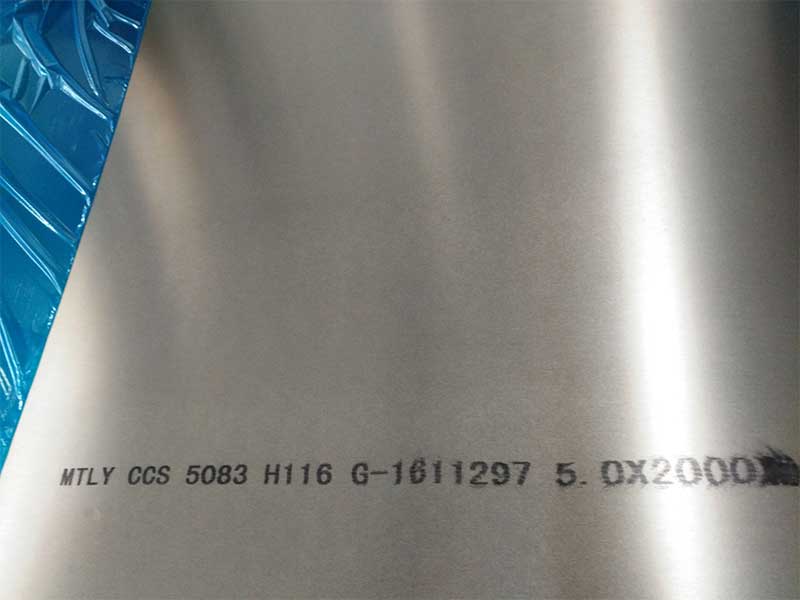
Marine 5083 aluminum plate
Marine 5083 Aluminum Plate belongs to the 5xxx series of aluminum-magnesium alloys and is classified as a non-heat-treatable alloy. Its high magnesium content (typically 4.0–4.9%) enhances its corrosion resistance, especially against seawater-related degradation such as pitting and stress corrosion cracking.
View Details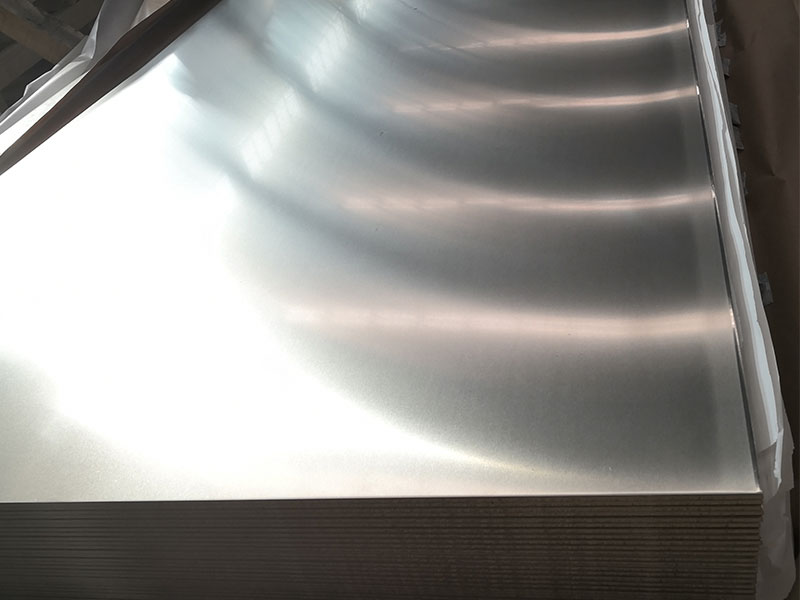
Marine 5052 aluminum plate
Marine 5052 Aluminum Plate is noted for its exceptional resistance to corrosion caused by seawater, salt spray, and marine atmospheres.
View Details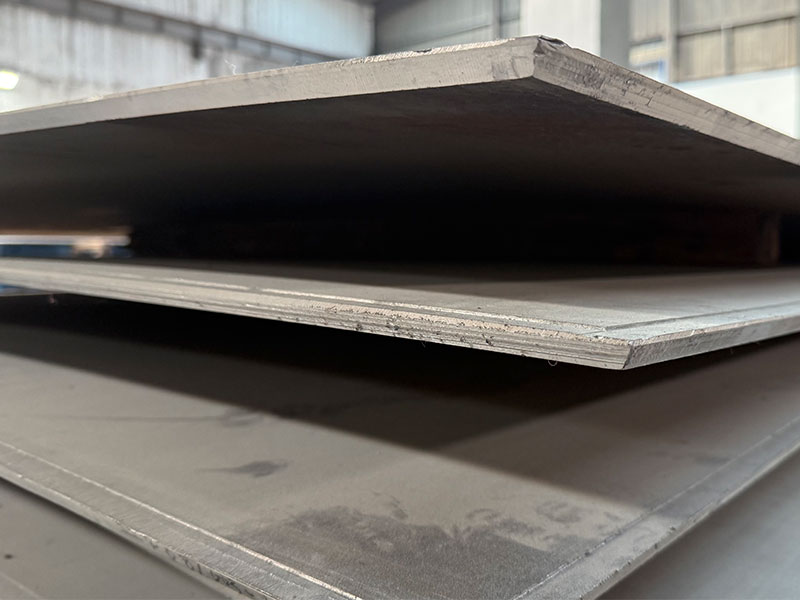
Marine aluminum steel clad plate
Aluminum / Steel Clad Plates consist of a sandwich construction in which a layer of marine-grade aluminum alloy is metallurgically bonded to a steel substrate.
View DetailsRelated Blog
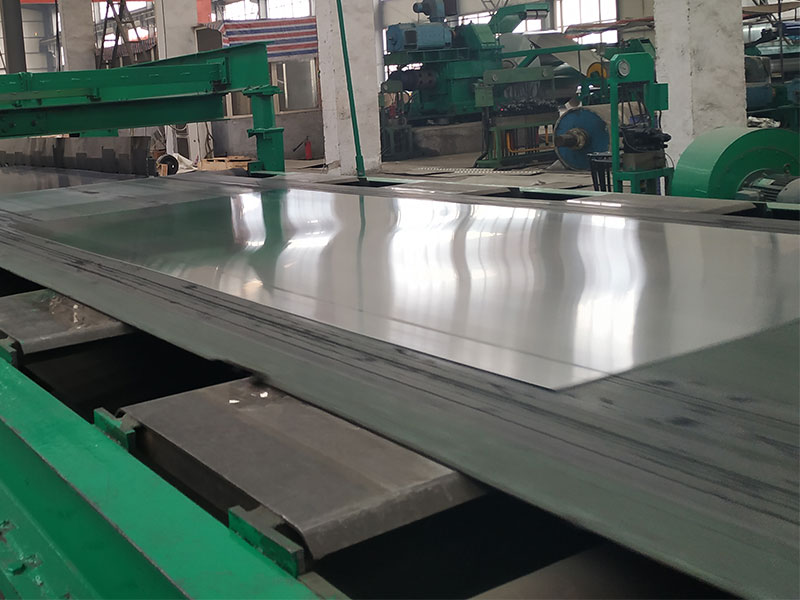
Marine grade 5052 alloy aluminium sheet plate
Features — why choose 5052 for marine applicationsExcellent resistance to seawater and marine atmospheres (better than 3003, 6061 in chloride environments).Good fatigue strength and impact resistance for thin-gauge structural components.
View Details
5052 5083 6063 h111 h22 h32 marine grade aluminum sheet plate
Marine projects demand materials that are lightweight, corrosion‑resistant, and reliable under harsh, salt‑water conditions. Among the most trusted options are the marine grade aluminum alloys 5052, 5083, and 6063 in tempers such as H111, H22, an.
View Details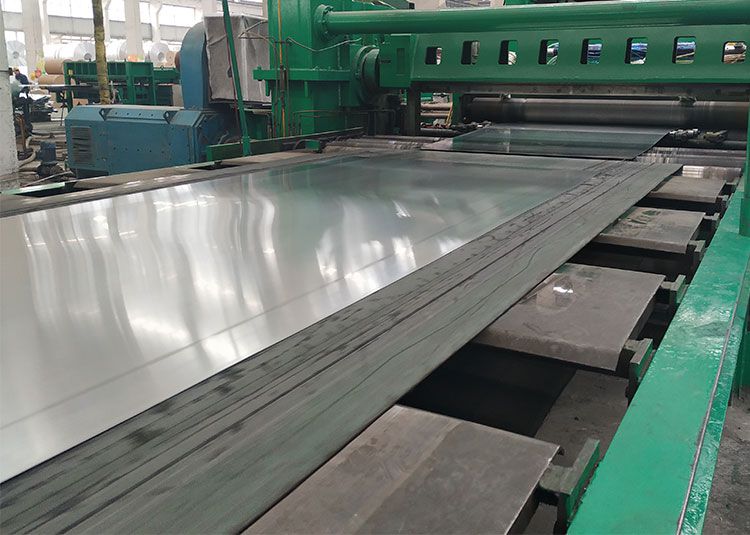
Marine 5052 aluminum plate
Marine 5052 aluminum plate is a seawater-proven, corrosion-resistant sheet and plate product widely chosen for boat hulls, decks, superstructures, fuel and water tanks, walkways, and coastal equipment.
View Details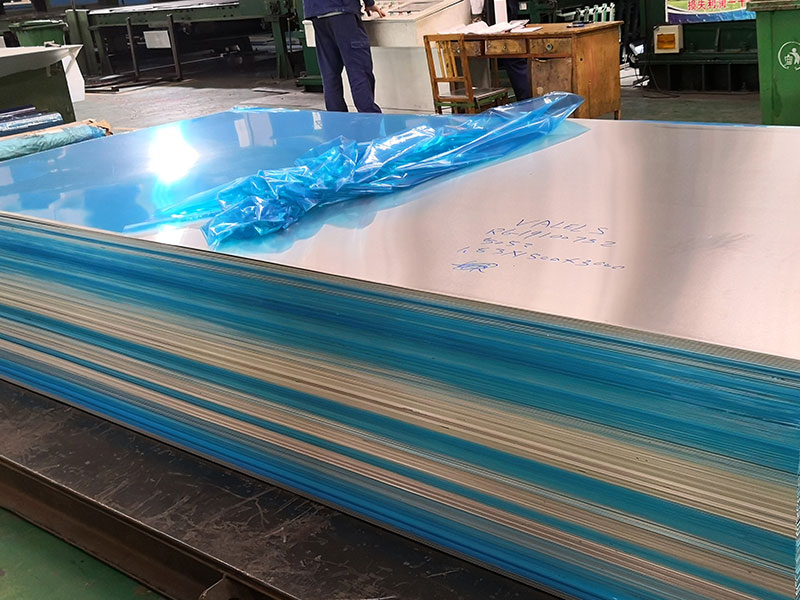
5052 H34 Aluminum Plate for Boat
When it comes to marine applications, specifically boat building and repair, selecting the right aluminum material is critical for long-lasting performance, corrosion resistance, and structural integrity.
View Details
Marine Aluminum Alloy Plate 5052 H112
Marine Aluminum Alloy Plate 5052 H112: The "Quiet Performer" Behind Reliable Boats and Coastal EquipmentIn marine engineering, the materials that get the most attention are often the flashy ones: ultra-high-strength alloys, exotic composites.
View Details
5052 h111 alloy aluminum marine plate
When it comes to marine aluminum plates, performance and reliability are non-negotiable qualities due to the challenging environments they encounter—saltwater corrosion, fluctuating temperatures, and mechanical stresses.
View Details
Leave a Message