
6061 Marine Aluminum Hexagonal Bars for Marine Hull and Deck Support
6061 Marine Aluminum Hexagonal Bars for Marine Hull and Deck Support
A boat is often judged by its hull shape, deck finish, engine power, or cabin layout. Yet many of the parts that keep a vessel quiet, aligned, and serviceable are not the large panels people notice first. They are the small structural details hidden around hatches, stringers, console bases, deck beams, ladders, brackets, and equipment mounts. This is where 6061 marine aluminum hexagonal bars earn attention.
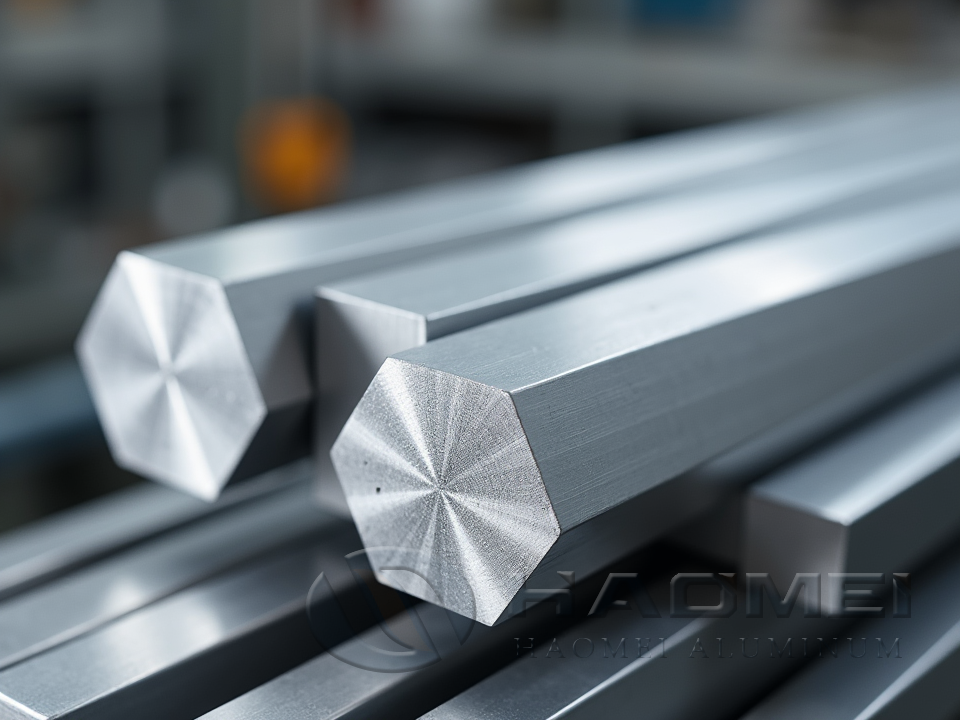
Think of a hexagonal bar as a support member that understands both structure and tools. Its six flat faces give the fabricator a natural grip surface, a repeatable reference face, and a clean shape for machining. In marine hull and deck support work, that geometry can reduce workshop effort while improving installation accuracy.
Why the Hex Shape Matters on a Boat
Round bar is smooth and strong, square bar is easy to align, and flat bar is convenient for brackets. Hexagonal bar sits between these forms. It has more contact faces than round bar and a more compact profile than square bar of similar across-flat size. For a boatbuilder, those six faces are practical. They allow a support post, spacer, standoff, or machined connector to be held firmly in a vise or wrench without special fixtures.
In deck support, a hex bar can be used as a machined pillar for hatch frames, raised platforms, radar arch mounts, seating bases, instrument consoles, and service covers. In hull-related support, it can serve as a connector, spacer, gusset component, threaded insert body, or local reinforcement member where loads need to move from one fitting into a frame, stringer, or bulkhead.
It is not usually chosen as hull plating or as a long primary longitudinal in a production hull. Its strength is in local support, mechanical connection, and precision details. That distinction helps buyers order the right material for the right job.
6061 in Marine Support: Strong, Machinable, Sensible
6061 aluminum is an Al-Mg-Si alloy valued for its balance of strength, machinability, weldability, and availability. In T6 temper, typical mechanical values are attractive for support components: tensile strength around 290 MPa, yield strength around 240 MPa, and a density close to 2.70 g/cm3. For customers, this means dependable strength without the weight penalty of steel.
The alloy machines cleanly. Threads, flats, counterbores, tapped holes, cross-drilled passages, chamfers, and milled shoulders can be produced with good repeatability. This is important when a hex bar becomes a custom deck support pillar or a threaded spacer between a bracket and a structural member. If the part must be installed, removed, inspected, and reinstalled during the vessel's service life, machining quality matters as much as raw strength.
When customers compare Marine Grade Aluminum Bars, 6061 is often selected for components that need accurate machining and moderate-to-high strength, especially in protected or properly coated areas. For constant seawater immersion, 5xxx alloys may often be preferred, but 6061 performs well in many marine support roles when corrosion control is handled correctly.
The Corrosion Question Customers Should Ask Early
Marine buyers sometimes ask a simple question: Is 6061 corrosion resistant enough for my boat? The honest answer is that the installation environment decides.
6061 has good general corrosion resistance, but it is not as naturally resistant to seawater as alloys such as 5083, 5086, or 5052. In hull and deck support work, this does not automatically disqualify it. Many hex bar supports are located above the waterline, inside cabins, under decks, in engine room structures, on removable equipment bases, or in coated assemblies. In those positions, proper design and surface protection can make 6061 a smart choice.
Good practice includes anodizing or marine coating, sealing cut ends, avoiding water traps, allowing drainage, and isolating the aluminum from stainless steel, carbon steel, copper alloys, and treated timber. Nylon washers, marine sealants, insulating sleeves, and compatible fastener systems can prevent galvanic attack. The best corrosion plan is not one dramatic treatment; it is a chain of small, disciplined choices.
Where Hexagonal Bars Fit in Hull and Deck Support
A 6061 hex bar can be cut into short support posts for deck panels that need removable access. Because the flats are easy to hold, technicians can tighten or adjust these posts without damaging the surface. For console bases, the hex shape can be machined with threaded ends and used as a rigid spacer that keeps the console level while transferring load into the deck frame.
Around hatches, hex bars can become compact standoffs that maintain frame height and resist twisting during repeated opening and closing. For ladders, rail brackets, davit bases, and small equipment platforms, they can serve as machined connector bodies where bolts approach from different directions. In a refit project, this shape is especially helpful because it adapts well to one-off parts.
For shaped stock orders, Marine aluminum hexagonal bars are commonly specified by across-flats dimension, temper, length, surface condition, straightness, and machining allowance. Across-flats size is more useful than outside corner-to-corner size for most fabrication drawings because it controls how the part sits in a fixture and how much material remains after machining.
Welding, Heat, and Strength Around the Joint
6061 can be welded, but customers should understand what welding does to T6 temper. The heat-affected zone near a weld loses some of its T6 strength unless post-weld heat treatment is used, which is not always practical for marine assemblies. For this reason, bolted or mechanically fastened 6061 hex bar supports are often attractive. They preserve material strength and make inspection easier.
If welding is required, the design should allow for reduced strength near the joint. Larger sections, added gussets, longer load paths, or different alloy choices may be needed. In many support details, a hybrid approach works well: weld the main 5xxx marine structure, then bolt machined 6061 hex components to it with proper isolation and sealant.
Buying Details That Prevent Dockside Problems
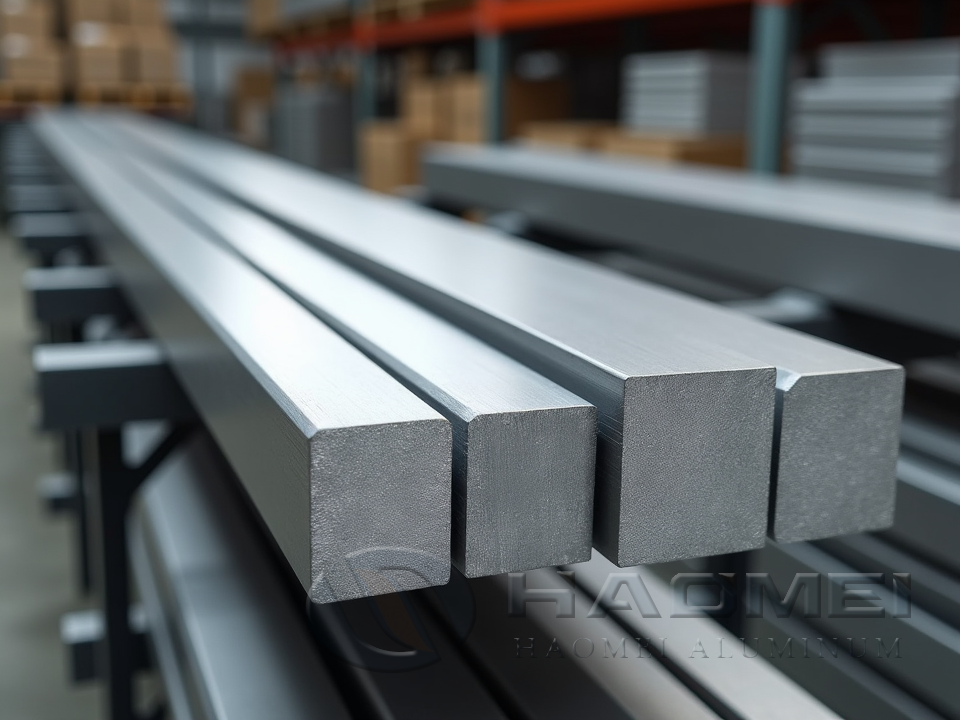
For a customer, the best purchase is not only the cheapest bar in stock. A marine support part needs traceable alloy, correct temper, consistent dimension, clean surface, and enough machining allowance. Ask for material certificates when the part will carry deck equipment, passenger loads, or safety-related fittings. Confirm whether the bar follows ASTM B221 or another agreed standard. Check whether the supplier measures across-flats tolerance, straightness, and surface defects.
If the part will be visible, ask about finish quality before ordering. If it will be anodized, confirm that the surface is suitable. If heavy machining is planned, allow extra stock. If the bar will become threaded support posts, discuss thread engagement length, expected load, and whether stainless fasteners will be isolated from the aluminum.
The right specification saves time later. A support post that is slightly undersized may rattle. A bar with poor straightness may complicate alignment. A part installed without isolation may look fine during launch and show corrosion after a season.
A Small Shape With Serious Responsibility
6061 marine aluminum hexagonal bars are not glamorous parts, but they help boats feel solid. They support panels without unnecessary bulk, simplify machining, give mechanics a dependable gripping surface, and provide strong local reinforcement where deck and hull fittings need accuracy.
For builders, refit yards, and equipment manufacturers, the value is practical: lighter than steel, easier to machine than many alternatives, strong enough for demanding support details, and available in a shape that cooperates with real workshop tools. When specified with the right temper, finish, isolation method, and dimensional tolerance, 6061 hex bar becomes more than raw material. It becomes a quiet structural partner between the hull, the deck, and every load the sea sends through them.

Related Products
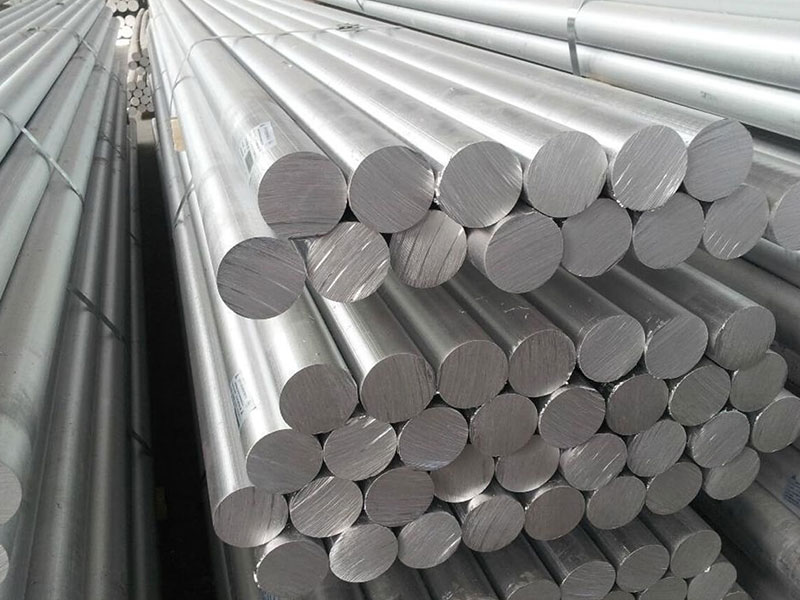
6082 marine aluminum rod & bar
6082 Aluminum Rods & Bars are extruded or rolled products manufactured from 6082 aluminum alloy — a thermally treated (typically T6 temper) aluminum-magnesium-silicon alloy that balances high tensile strength, good weldability, and excellent corrosion resistance.
View Details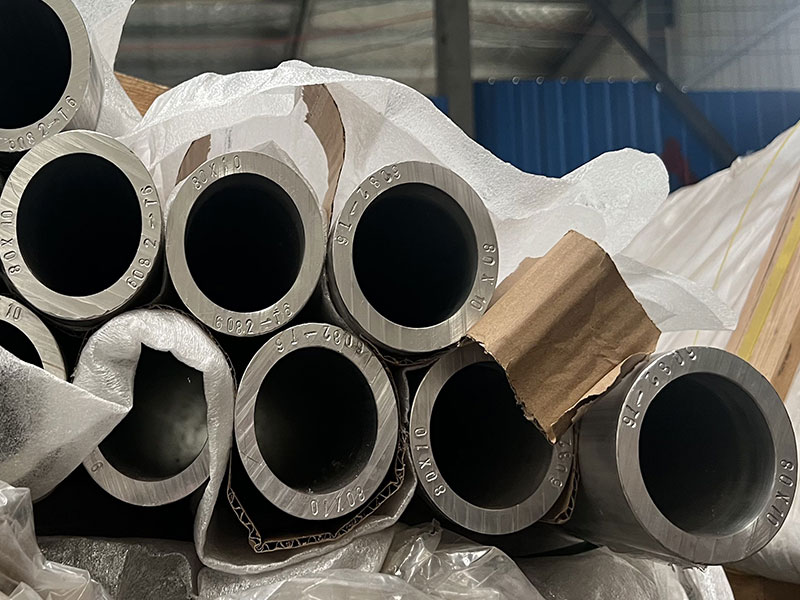
Marine aluminum hollow bars
Marine Grade Aluminum Hollow Bars are fabricated from high-quality alloys such as 5083, 5052, 6061, and 6082, all known for their exceptional resistance to seawater corrosion, salt spray, and marine atmospheres.
View Details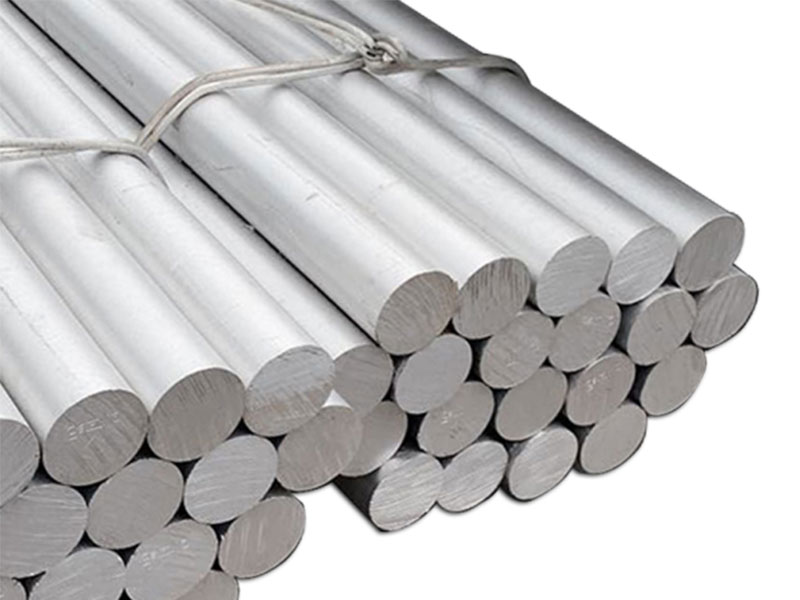
Marine grade aluminum solid bar
Marine Grade Aluminum Solid Bars are produced from premium aluminum alloys optimized for saltwater exposure, such as 5083, 5052, 6061, and 6082. These alloys offer unparalleled resistance to corrosion caused by seawater, salt spray, and marine atmospheres, while maintaining excellent mechanical strength and toughness.
View Details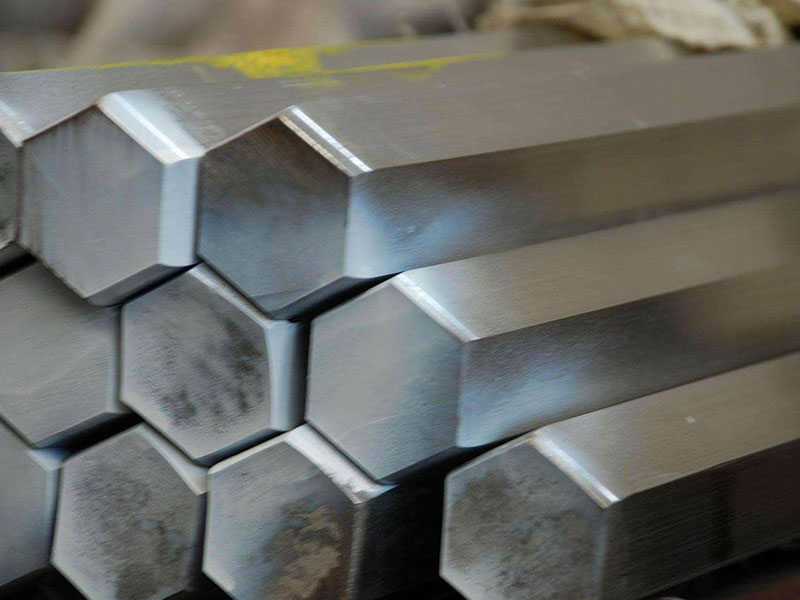
Marine aluminum hexagonal bars
Marine Grade Aluminum Hexagonal Bars are produced from premium corrosion-resistant aluminum alloys such as 5083, 5052, 6061, and 6082.
View DetailsRelated Blog
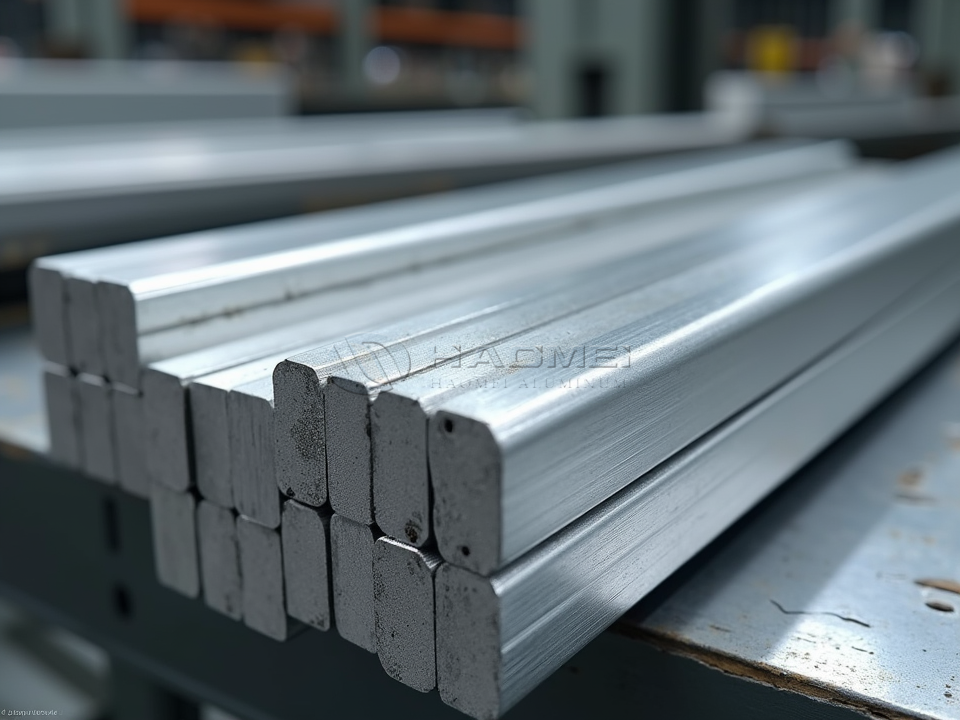
Marine Aluminum Hollow Bars for Custom Offshore Vessel Construction
Learn how marine aluminum hollow bars support lightweight, corrosion-resistant offshore vessel structures, fittings, piping supports, and custom machined parts.
View Details
6061 Marine Aluminum Hexagonal Bars for Marine Hull and Deck Support
A practical look at 6061 marine aluminum hexagonal bars, covering strength, corrosion control, machining, and deck or hull support use for builders and buyers.
View Details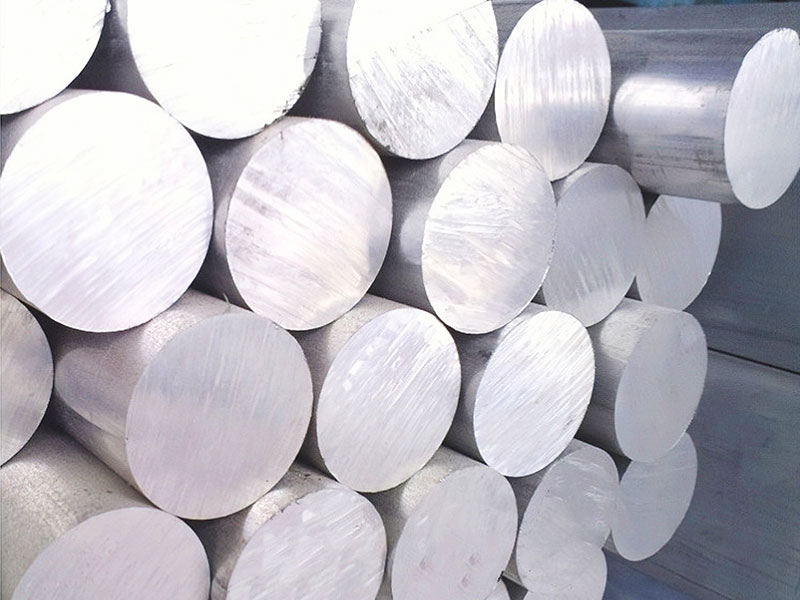
5083 Marine Aluminum Hollow Bars for Marine Equipment Durability
Marine environments punish materials relentlessly: salt spray accelerates corrosion, cyclic wave loads drive fatigue, and maintenance windows are tight. 5083 marine aluminum hollow bars are engineered for this reality-combining high strength.
View Details
5052 Marine Aluminum Bar for High Performance Marine Structural Parts
When marine structures demand long service life, low maintenance, and consistent mechanical performance, 5052 marine aluminum bar is a proven solution. Built around a magnesium-strengthened alloy system.
View Details
6082 Marine Aluminum Hollow Bars for Custom Boat Frame Solutions
6082 Marine Aluminum Hollow Bars for Custom Boat Frame Solutions In modern boatbuilding, frame design has evolved from heavy, overbuilt structures to lightweight, precision-engineered systems.
View Details
5083 Marine Aluminum Hexagonal Bars for Custom Shipbuilding Reinforcements
Custom shipbuilding reinforcements demand materials that stay reliable under saltwater exposure, cyclic wave loading, vibration, and tight fabrication schedules.
View Details
Leave a Message