
6082 Marine Aluminum Hexagonal Bars for Marine Construction and Design
In marine construction, a bar is rarely just a bar. It may become a cleat component, a ladder fitting, a fastening spacer, a steering linkage part, a deck hardware insert, or a machined connector hidden inside a larger assembly. When that bar has a hexagonal profile, it brings something practical to the yard floor: six flat faces that are easy to grip, index, clamp, mill, and align. This is where 6082 marine aluminum hexagonal bars become especially useful.
6082 belongs to the Al-Mg-Si alloy family, strengthened by magnesium and silicon, with manganese added to improve strength and grain control. Compared with softer marine alloys, it offers higher mechanical capacity. Compared with many structural steels, it saves weight and resists the marine atmosphere more comfortably when properly finished and isolated from galvanic attack.
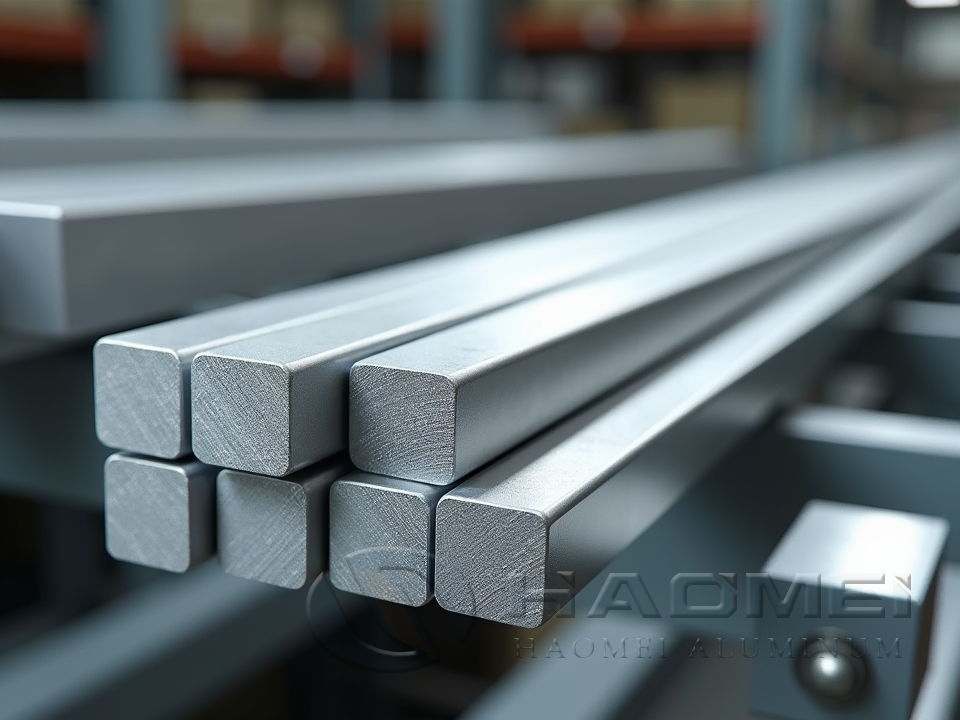
Why the Hexagonal Shape Matters at Sea
A round bar is easy to turn, and a square bar is easy to position, but a hexagonal bar sits between both ideas. Its geometry allows secure wrench contact, stable clamping, and repeatable angular positioning during fabrication. For designers of small craft, workboats, pontoons, marina systems, and offshore service platforms, that means less wasted machining time and better control during assembly.
The six-sided form is helpful for threaded inserts, custom nuts, standoff posts, hinge pins with wrench flats, marine handles, lock bodies, pump fittings, railing connectors, and adjustable deck hardware. In many workshops, hexagonal stock is selected not because the finished part must remain hexagonal, but because it makes cutting, turning, drilling, and torque transfer more predictable.
For buyers comparing Marine aluminum hexagonal bars with round or square profiles, the decision often comes down to handling and function. Hex stock reduces the need to mill flats later, especially in medium-volume boat hardware production.
Alloy Character: 6082 in Marine Service
6082 is not the most common hull plate alloy, but it is a smart choice for machined marine components where strength, dimensional stability, and corrosion resistance must work together. It performs well in deck equipment, structural accessories, brackets, supports, and precision parts that need better strength than 6063 and stronger performance than many general-purpose aluminum bars.
In seawater-adjacent conditions, 6082 offers good resistance to atmospheric corrosion, spray, and humid dockside exposure. For permanent saltwater immersion, surface treatment, correct design drainage, and electrical isolation should be considered. Anodizing, powder coating, passivation practices, and the use of compatible fasteners can greatly extend service life.
The alloy also machines well in T6 temper. Chips break cleanly with suitable tooling, and the material supports drilling, tapping, milling, turning, and light forming after controlled processing. Weldability is acceptable, although welding can reduce strength in the heat-affected zone. If a welded structure requires certified strength recovery, engineering review and possible post-weld treatment should be discussed.
Typical Product Parameters
| Item | Common Supply Range |
|---|---|
| Alloy | 6082 aluminum alloy |
| Shape | Hexagonal bar, six equal flats |
| Temper | T6, T651, T6511, T4, O as requested |
| Across flats | 6 mm to 100 mm, custom sizes possible |
| Length | 1 m to 6 m, or cut-to-length |
| Surface | Mill finish, polished, anodized, coated, brushed |
| Production route | Extruded, drawn, or precision machined from bar stock |
| Density | About 2.70 g/cm³ |
| Elastic modulus | About 69 GPa |
| Machinability | Good in T6 and T651 conditions |
| Corrosion resistance | Good in marine atmosphere with suitable protection |
Dimensional tolerance should be chosen according to the final use. A decorative handrail connector does not need the same tolerance as a steering system component. For precision machining, buyers should define across-flat tolerance, straightness, cut length tolerance, surface condition, and inspection requirements before ordering.
Chemical Composition of 6082 Aluminum
The chemistry of 6082 is controlled to create a balance of strength, corrosion behavior, and heat-treatment response. The table shows typical limits used under EN 573-3 and comparable international references.
| Element | Content, % by weight |
|---|---|
| Silicon, Si | 0.70 - 1.30 |
| Iron, Fe | Max 0.50 |
| Copper, Cu | Max 0.10 |
| Manganese, Mn | 0.40 - 1.00 |
| Magnesium, Mg | 0.60 - 1.20 |
| Chromium, Cr | Max 0.25 |
| Zinc, Zn | Max 0.20 |
| Titanium, Ti | Max 0.10 |
| Other elements, each | Max 0.05 |
| Other elements, total | Max 0.15 |
| Aluminum, Al | Balance |
Magnesium and silicon form strengthening phases during heat treatment. Manganese improves structural reliability, especially where the bar is expected to carry load after machining. Low copper content helps preserve corrosion resistance, which is important in marine and coastal installations.
Temper Selection for Marine Designers
T6 is the most widely requested temper for 6082 marine aluminum hexagonal bars. It is solution heat-treated and artificially aged, giving high strength and good machinability. T651 and T6511 add stress-relieved characteristics, which can reduce distortion during cutting and machining. This matters when long bars are being converted into threaded studs, shaft-like connectors, or precisely aligned deck components.
T4 can be selected where some forming is needed before final aging, while O temper is used when maximum softness is more important than strength. In most marine construction and hardware applications, T6 or T6511 offers the best working balance.
Typical mechanical properties for 6082-T6 bar may include tensile strength around 290 MPa or higher, yield strength around 250 MPa or higher, elongation commonly near 8 percent or above, and hardness around 90 to 100 HB. Exact values depend on bar size, production route, and governing standard.
For customers who need matched procurement across different profiles, 6082 marine aluminum rod & bar can be specified with related temper, certificate, and surface requirements.
Standards and Certification Conditions
6082 marine aluminum hexagonal bars are commonly supplied according to EN 573 for chemical composition, EN 755 for extruded bar tolerances and properties, EN 754 for cold-drawn products, ASTM B221 or ASTM B221M for extruded aluminum bars, and ISO 6362 for wrought aluminum extruded products. Depending on the vessel class or project contract, material certificates can be issued to EN 10204 3.1.
For marine projects involving class approval, buyers may request additional inspection under ABS, DNV, LR, BV, or CCS related requirements. Certification needs should be confirmed before production because traceability, sampling, testing, and marking must be arranged during manufacturing, not after delivery.
Important inspection points usually include chemical analysis, mechanical testing, dimensional tolerance, surface quality, straightness, packaging condition, and batch traceability. For machined boat hardware, surface defects such as deep scratches, dents, laps, or extrusion lines may be unacceptable even when basic mechanical properties pass.
Design and Installation Notes
A good marine part starts before machining. Designers should avoid water-trapping pockets, sharp internal corners, and direct contact between aluminum and stainless steel without insulation. When stainless fasteners are used, nylon washers, sealants, sleeves, or suitable barrier coatings help reduce galvanic corrosion.
For threaded components, thread engagement length should be generous because aluminum is softer than steel. Coarse threads may perform better than fine threads in many marine assemblies. If the part will be frequently adjusted, hard anodizing or threaded inserts can improve wear resistance.
Welding 6082 is possible with suitable filler alloys, often from the 4xxx or 5xxx series depending on the design requirement. Since strength near the weld can drop, welded load-bearing parts should not rely only on catalog values for T6 material. A marine engineer should verify the final assembly strength.
Where 6082 Hex Bars Fit Best
6082 marine aluminum hexagonal bars are well suited for boat hardware, deck fasteners, machined bushings, railing connectors, marine furniture fittings, hatch mechanisms, ladder mounts, cleat bases, pontoon accessories, and structural support details. They are also useful in shipyard maintenance because hex stock can be quickly cut and machined into replacement parts.
The advantage is not only strength. It is the combination of shape, alloy, temper, and practical handling. In a marine workshop, time saved during clamping and machining is real value. In a finished vessel, reduced weight, clean corrosion performance, and reliable fit are even more valuable.
For marine construction and design teams looking for a strong, machinable, and corrosion-conscious bar profile, 6082 aluminum hexagonal bar offers a balanced answer. It gives engineers a material that behaves predictably, gives machinists a profile they can hold securely, and gives boat builders a durable component base for demanding coastal and offshore environments.

Related Products
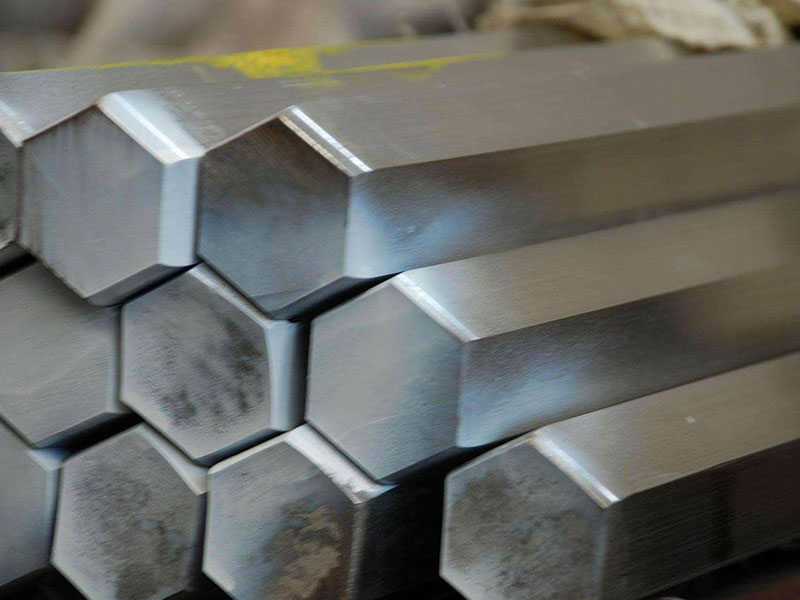
Marine aluminum hexagonal bars
Marine Grade Aluminum Hexagonal Bars are produced from premium corrosion-resistant aluminum alloys such as 5083, 5052, 6061, and 6082.
View Details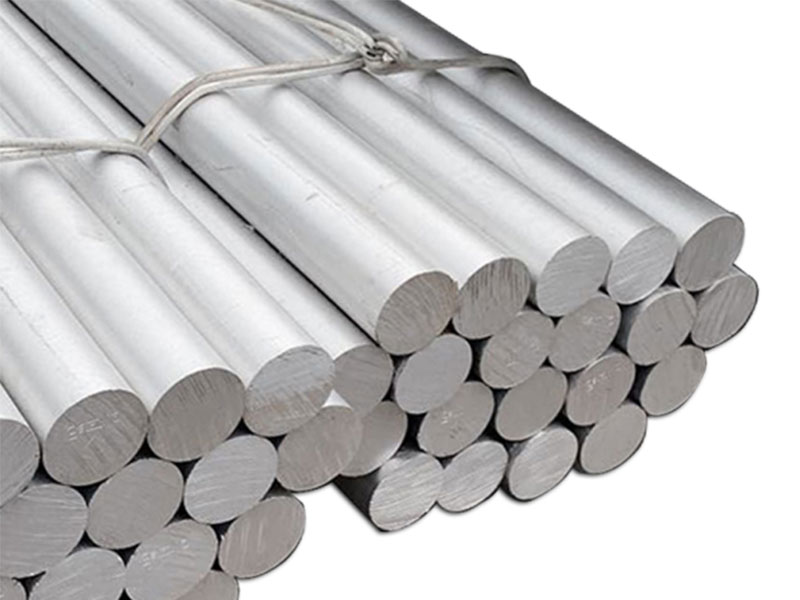
Marine grade aluminum solid bar
Marine Grade Aluminum Solid Bars are produced from premium aluminum alloys optimized for saltwater exposure, such as 5083, 5052, 6061, and 6082. These alloys offer unparalleled resistance to corrosion caused by seawater, salt spray, and marine atmospheres, while maintaining excellent mechanical strength and toughness.
View Details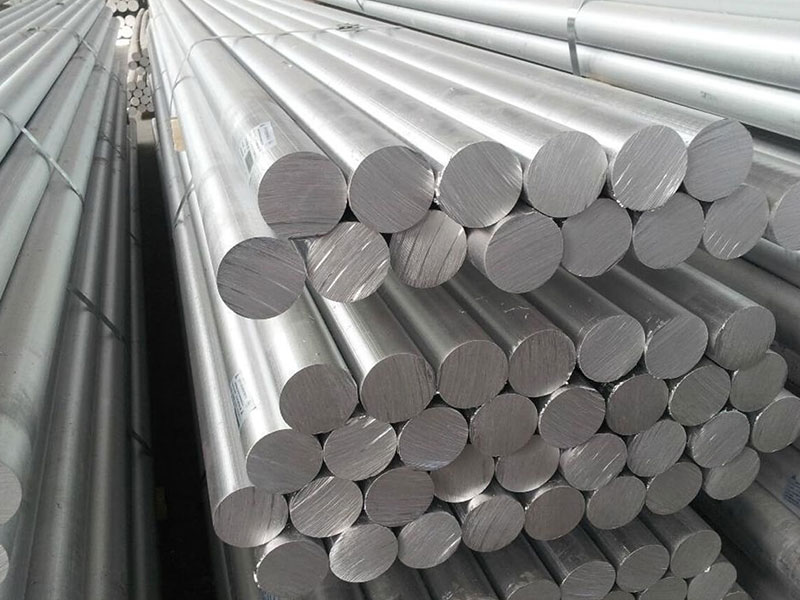
6082 marine aluminum rod & bar
6082 Aluminum Rods & Bars are extruded or rolled products manufactured from 6082 aluminum alloy — a thermally treated (typically T6 temper) aluminum-magnesium-silicon alloy that balances high tensile strength, good weldability, and excellent corrosion resistance.
View Details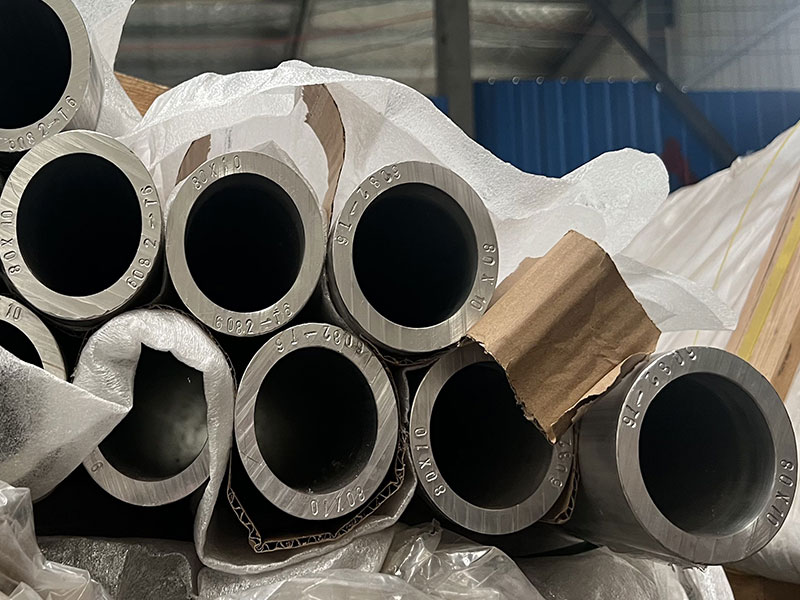
Marine aluminum hollow bars
Marine Grade Aluminum Hollow Bars are fabricated from high-quality alloys such as 5083, 5052, 6061, and 6082, all known for their exceptional resistance to seawater corrosion, salt spray, and marine atmospheres.
View DetailsRelated Blog
6061 Marine Aluminum Hexagonal Bars for Boat Hull and Frame Assembly
6061 Marine Aluminum Hexagonal Bars are engineered to deliver exceptional strength, corrosion resistance, and machinability for marine applications. Used widely in boat hull and frame assembly.
View Details
6082 Marine Aluminum Hollow Bars for Custom Boat Frame Solutions
6082 Marine Aluminum Hollow Bars for Custom Boat Frame Solutions In modern boatbuilding, frame design has evolved from heavy, overbuilt structures to lightweight, precision-engineered systems.
View Details
5083 Marine Aluminum Hexagonal Bars for Ship Hull and Deck Fabrication
In the demanding world of marine construction and shipbuilding, material performance defines safety, durability, and operational efficiency. 5083 Marine Aluminum Hexagonal Bars have emerged as a premium solution for ship hull and deck fabrication.
View Details
6082 Marine Aluminum Hollow Bars for Offshore Engineering Reinforcements
Learn how 6082 marine aluminum hollow bars reinforce offshore structures with strength, corrosion resistance, and weight-saving performance.
View Details
Marine Grade Aluminum Solid Bar for Shipbuilding Reinforcements
In modern shipbuilding, material selection is paramount to ensure strength, durability, corrosion resistance, and lightweight design. One of the most critical materials used in this domain is the Marine Grade Aluminum Solid Bar.
View Details
5083 Marine Aluminum Hexagonal Bars for Saltwater Resistant Boat Hull Parts
Explore 5083 marine aluminum hex bars for seawater resistant boat hull parts, with specs, chemistry, tempers, machining notes, fabrication guidance, and uses.
View Details
Leave a Message