
5083 Marine Aluminum Hollow Bars for Saltwater Resistant Marine Frames
5083 marine aluminum hollow bars are engineered for structural marine components that must remain strong, light, and corrosion resistant in wet, saline environments. Made from an aluminum-magnesium alloy, these hollow sections combine high strength with excellent weldability and long-term performance in seawater exposure.
For boat builders, offshore fabricators, dock contractors, and marine equipment producers, 5083 hollow bars provide an efficient material choice for frames where weight reduction and saltwater durability are equally important. Their internal cavity lowers mass compared with solid bar, helping improve vessel payload, fuel efficiency, handling, and installation speed.
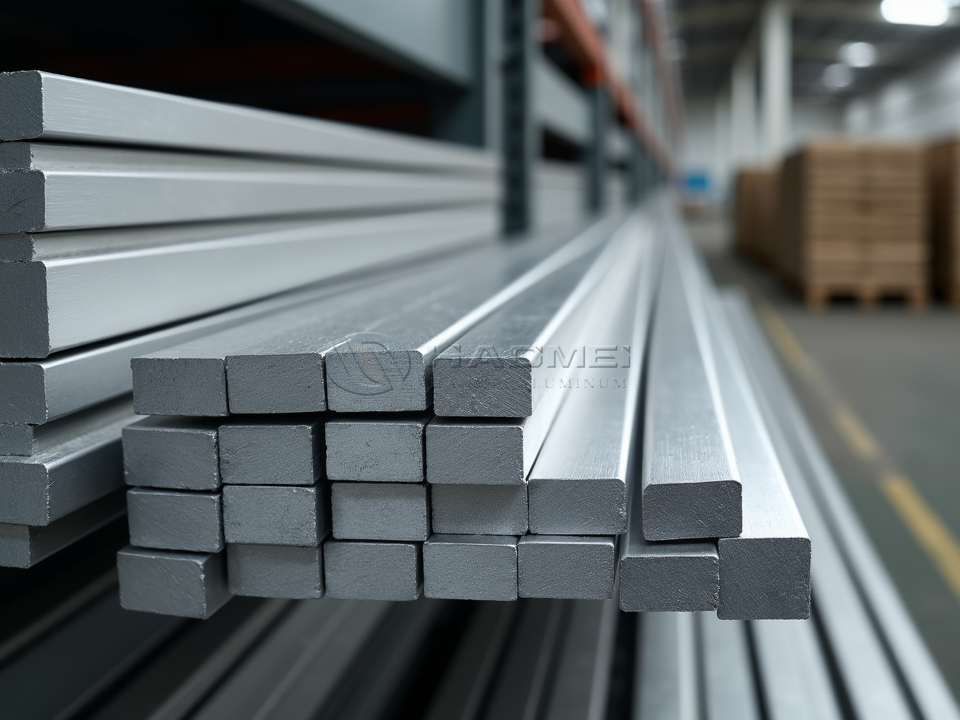
Why 5083 Aluminum Performs Well in Marine Frames
The high magnesium content of 5083 aluminum forms a stable protective oxide layer when exposed to air and water. This natural barrier helps resist general corrosion in salt spray, seawater splash zones, humid ports, and coastal service environments.
Unlike heat-treatable 6xxx alloys, 5083 develops its strength mainly through strain hardening. This makes it especially suitable for welded assemblies, since it retains practical mechanical performance after fabrication when proper welding procedures are followed. The alloy also offers excellent low-temperature toughness, making it useful for vessels and structures operating in cold marine regions.
Hollow-bar geometry adds another advantage. A well-designed tube or hollow section can provide high bending stiffness relative to its weight. This allows fabricators to create rigid frames without using oversized solid stock.
| Performance Feature | Value for Marine Frames |
|---|---|
| Saltwater corrosion resistance | Suitable for marine atmosphere, splash exposure, and protected immersion service |
| Strength-to-weight ratio | Reduces frame mass while maintaining structural stiffness |
| Weldability | Compatible with common MIG and TIG marine fabrication processes |
| Formability | Supports bending, cutting, drilling, machining, and custom frame fabrication |
| Low-temperature toughness | Maintains reliable properties in cold-water marine applications |
| Recyclability | Aluminum scrap can be recovered and reused efficiently |
Common Applications for 5083 Hollow Bar
5083 marine aluminum hollow bars are widely used where tubular strength and corrosion resistance are needed without the weight penalty of carbon steel. Round, square, rectangular, and custom-profile hollow sections can be selected according to load direction, joint design, and available installation space.
| Marine Application | Typical Hollow Bar Function |
|---|---|
| Boat and yacht frames | Supports cockpit structures, consoles, canopy frames, and deck modules |
| Workboats and patrol vessels | Forms lightweight equipment racks, guard structures, and support frames |
| Pontoon systems | Builds cross members, rail frames, deck supports, and structural braces |
| Marine railings | Produces handrails, boarding rails, safety barriers, and ladder frames |
| Offshore access equipment | Supports walkways, platforms, ladders, and service enclosures |
| Floating docks | Provides corrosion-resistant framing for pontoons and modular dock systems |
| Aquaculture equipment | Used in fish-farm frames, service platforms, cages, and access structures |
| Marine vehicle hardware | Supports equipment mounts, davits, racks, and protective structures |
For projects requiring alternative profiles or complementary stock forms, Marine aluminum hollow bars can be specified in dimensions suited to structural fabrication and marine hardware production.
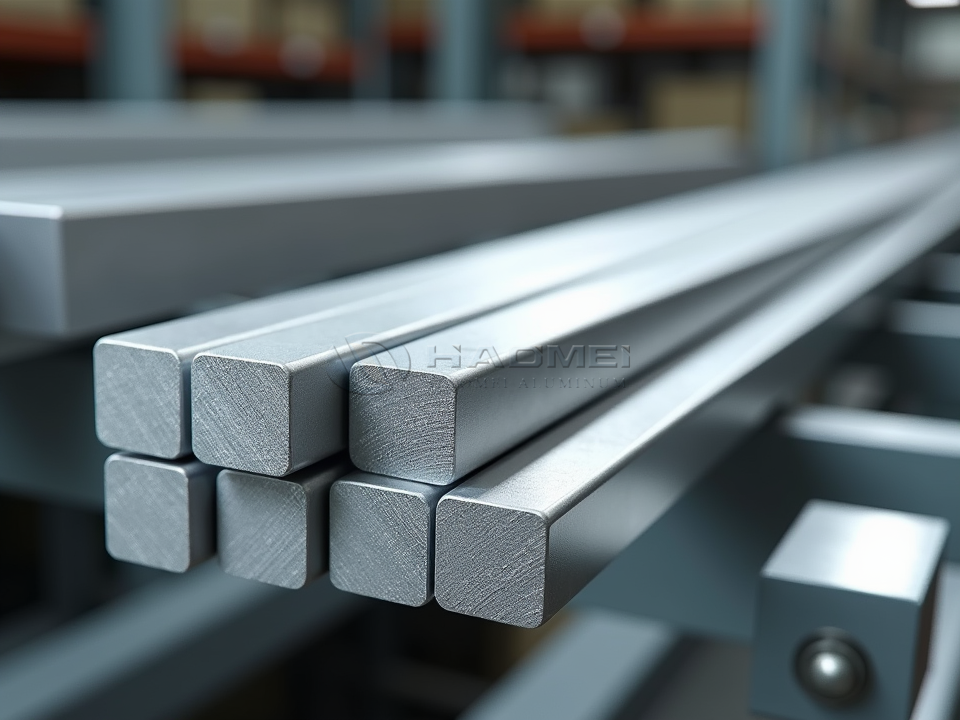
Chemical Composition of 5083 Marine Aluminum
5083 is part of the 5xxx aluminum-magnesium alloy family. Magnesium delivers strength and corrosion resistance, while manganese and chromium support grain structure and durability. Composition limits may vary slightly by applicable standard and mill certification requirements.
| Element | Composition by Weight, % |
|---|---|
| Magnesium, Mg | 4.0 - 4.9 |
| Manganese, Mn | 0.4 - 1.0 |
| Chromium, Cr | 0.05 - 0.25 |
| Silicon, Si | 0.40 max |
| Iron, Fe | 0.40 max |
| Copper, Cu | 0.10 max |
| Zinc, Zn | 0.25 max |
| Titanium, Ti | 0.15 max |
| Other elements, each | 0.05 max |
| Other elements, total | 0.15 max |
| Aluminum, Al | Balance |
The alloy contains no intentional copper addition, which supports its resistance to marine corrosion compared with many high-copper aluminum alloys.
Technical Specifications and Physical Properties
Dimensions, wall thickness, tolerances, and mechanical properties should be confirmed on the material test certificate for each order. Values can change with hollow-section shape, extrusion ratio, temper, and applicable standard.
| Property | Typical Value |
|---|---|
| Alloy designation | EN AW-5083 / AA 5083 |
| Alloy family | Aluminum-magnesium, non-heat-treatable |
| Density | 2.66 g/cm³ |
| Melting range | 574 - 638°C |
| Modulus of elasticity | Approximately 71 GPa |
| Thermal conductivity | Approximately 117 W/m·K |
| Electrical conductivity | Approximately 29% IACS |
| Coefficient of thermal expansion | Approximately 23.8 × 10⁻⁶ /°C |
| Typical surface finish | Mill finish, brushed, polished, coated, or painted |
| Available forms | Round, square, rectangular, and custom hollow profiles |
A hollow bar may be supplied as a seamless tube or as an extruded hollow profile produced through a porthole die. The choice depends on section geometry, pressure requirements, inspection needs, and project specifications. For structural marine frames, extruded hollow profiles are often an efficient solution.
Temper Conditions and Mechanical Performance
5083 cannot be strengthened through conventional solution heat treatment and artificial aging like 6061-T6. Instead, its temper is created through controlled rolling, cold work, stabilization, or annealing practices. H116 and H321 are frequently selected for demanding marine exposure because they are designed to improve resistance to exfoliation and intergranular corrosion.
| Temper | Condition | Typical Tensile Strength, MPa | Typical Yield Strength, MPa | Typical Elongation | Marine Use |
|---|---|---|---|---|---|
| O | Fully annealed | 270 min | 125 min | 16% | Formed parts requiring high ductility |
| H111 | Lightly strain hardened | 275 min | 125 min | 12% | General fabricated marine structures |
| H112 | As fabricated | 275 min | 125 min | 10% | Extruded or formed structural sections |
| H116 | Strain hardened and corrosion controlled | 305 min | 215 min | 10% | Saltwater-exposed hull and frame components |
| H321 | Strain hardened and stabilized | 305 min | 215 min | 10% | Welded marine structures with corrosion demands |
These figures are indicative values rather than design allowables. Structural calculations should use the certified properties of the supplied hollow bar and the requirements of the vessel, offshore, or dock project.
Standards Commonly Used for Supply and Inspection
Material standards establish chemistry, tolerances, mechanical testing, and delivery requirements. The most appropriate standard depends on whether the product is supplied as an extrusion, tube, structural profile, or project-specific marine component.
| Standard | Typical Relevance |
|---|---|
| ASTM B221 | Aluminum extruded bars, rods, wire, profiles, and tubes |
| EN 755-2 | Mechanical properties for aluminum extruded rods, bars, tubes, and profiles |
| EN 755-9 | Dimensional and form tolerances for extruded profiles and tubes |
| ASTM B928/B928M | Corrosion-resistant 5xxx marine aluminum plate reference for H116 and H321 conditions |
| ASTM G66 | Visual assessment of exfoliation corrosion susceptibility |
| ASTM G67 | Mass-loss testing for susceptibility to intergranular corrosion |
| ABS, DNV, Lloyd's Register rules | Project or vessel-class requirements when specified by the customer |
Fabrication Guidance for Saltwater Frames
5083 hollow bars can be cut with carbide saws, machined with suitable aluminum tooling, and joined by MIG or TIG welding. Filler alloys such as 5183, 5356, or 5556 are commonly considered for 5083 welding, subject to joint design and service requirements.
| Fabrication Area | Recommended Practice |
|---|---|
| Welding | Use clean joints, suitable filler metal, and controlled heat input |
| Cutting | Remove sharp edges and avoid contaminating the surface with carbon-steel tools |
| Fasteners | Use compatible marine-grade fasteners and isolate dissimilar metals where needed |
| Galvanic protection | Add insulating washers, sealants, gaskets, or coatings between aluminum and steel, copper, or carbon fiber |
| Surface protection | Use marine coating systems when appearance, abrasion resistance, or added barrier protection is required |
| Drainage | Design frames to avoid trapped seawater inside hollow cavities |
End caps, drain holes, and sealed joints deserve particular attention. Saltwater trapped inside an unvented hollow member can create a more severe local corrosion environment than an openly drained section. Good frame design should allow moisture to escape and permit inspection of exposed joints.
Selecting the Right Hollow Bar
The best 5083 hollow bar depends on structural load, unsupported span, wall thickness, welding layout, corrosion exposure, and fabrication method. Square and rectangular sections are often favored for deck frames and equipment supports because they provide flat mounting surfaces. Round hollow bars are frequently selected for rails, tubular braces, and visually smooth marine hardware.
Specify alloy 5083, required temper, section shape, outside dimensions, wall thickness, length, tolerance class, surface condition, standard, and certification requirements when requesting material. With these details defined early, 5083 marine aluminum hollow bars can deliver a durable, lightweight foundation for saltwater-resistant marine frames.

Related Products
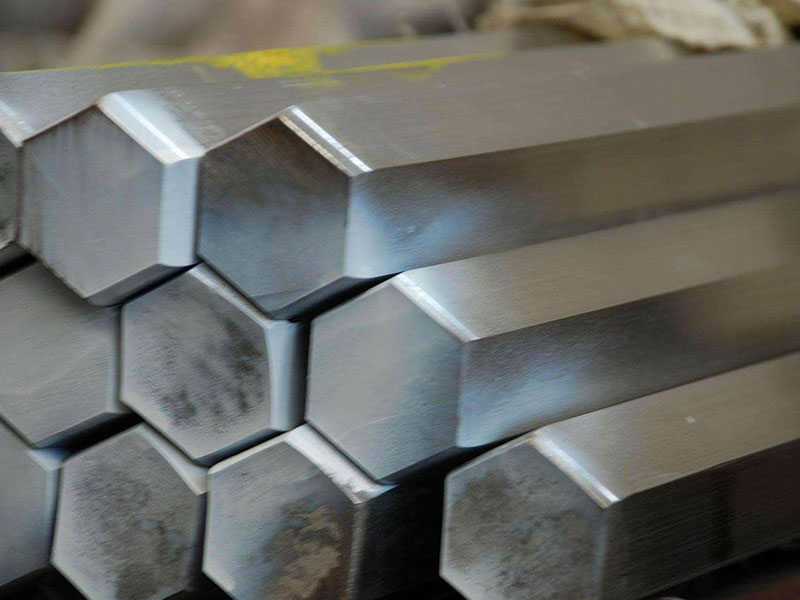
Marine aluminum hexagonal bars
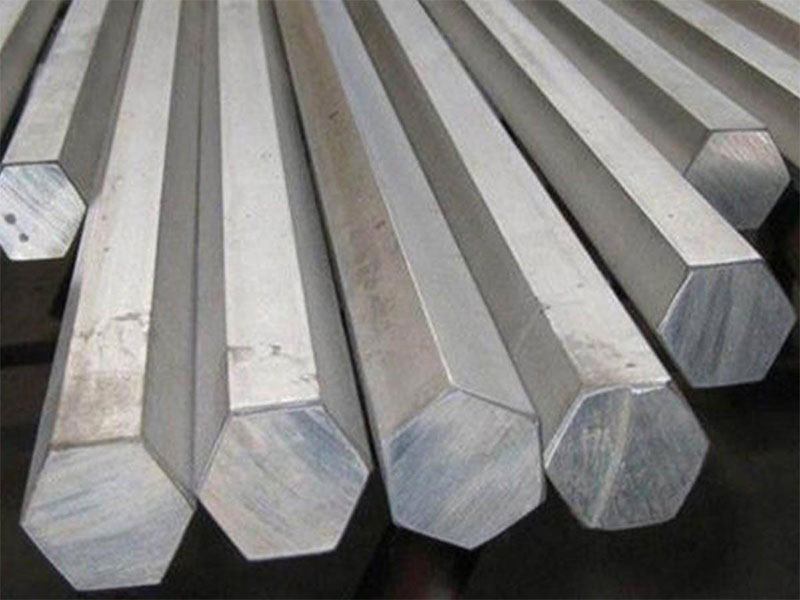
Marine Grade Aluminum Hexagonal Bars are produced from premium corrosion-resistant aluminum alloys such as 5083, 5052, 6061, and 6082.
View Details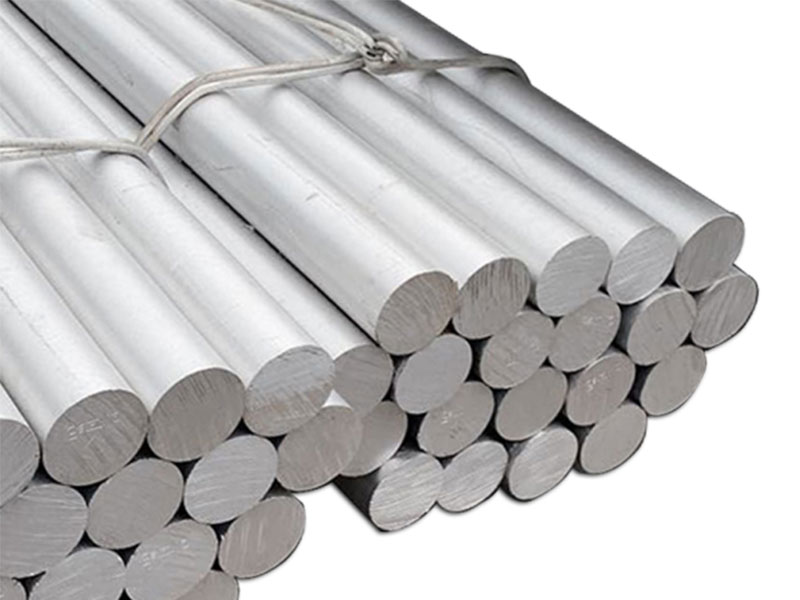
Marine grade aluminum solid bar
Marine Grade Aluminum Solid Bars are produced from premium aluminum alloys optimized for saltwater exposure, such as 5083, 5052, 6061, and 6082. These alloys offer unparalleled resistance to corrosion caused by seawater, salt spray, and marine atmospheres, while maintaining excellent mechanical strength and toughness.
View Details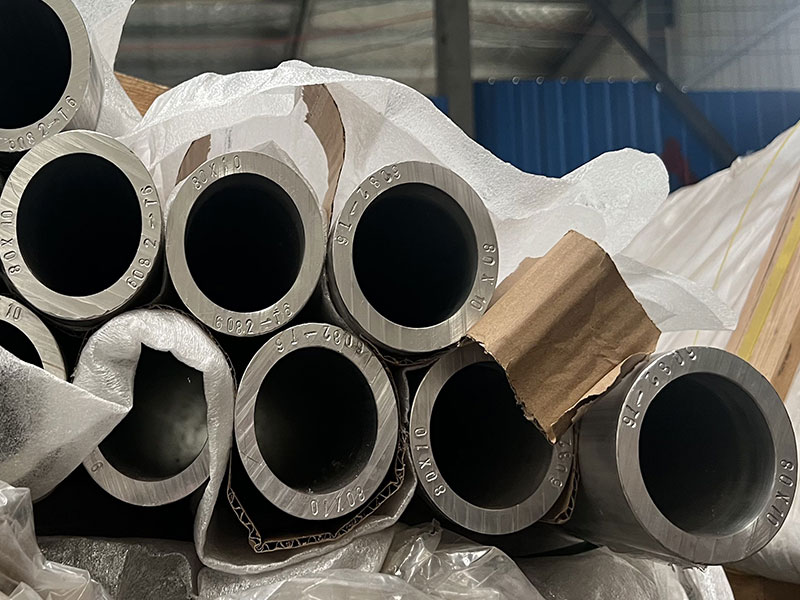
Marine aluminum hollow bars
Marine Grade Aluminum Hollow Bars are fabricated from high-quality alloys such as 5083, 5052, 6061, and 6082, all known for their exceptional resistance to seawater corrosion, salt spray, and marine atmospheres.
View Details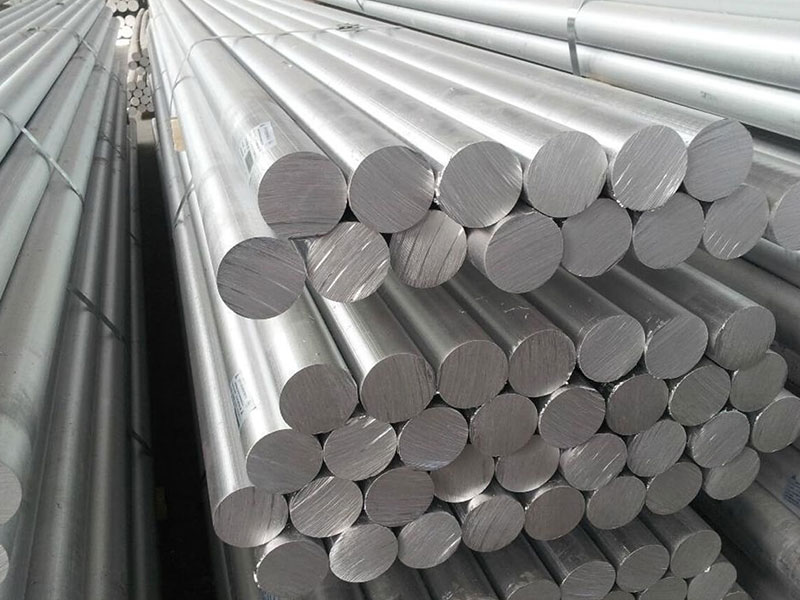
6082 marine aluminum rod & bar
6082 Aluminum Rods & Bars are extruded or rolled products manufactured from 6082 aluminum alloy — a thermally treated (typically T6 temper) aluminum-magnesium-silicon alloy that balances high tensile strength, good weldability, and excellent corrosion resistance.
View DetailsRelated Blog
Marine Aluminum Hexagonal Bars for Custom Marine Vessel Support
Marine environments demand materials that resist corrosion, carry load reliably, and remain workable for custom fabrication. Marine aluminum hexagonal bars are purpose-built for these conditions: a high-strength.
View Details
5052 Marine Aluminum Hollow Bars for High Strength Marine Frame Parts
Marine structures demand a material that holds up to saltwater corrosion, cyclic loading, and fabrication realities (forming, welding, machining) without turning maintenance into a constant expense.
View Details
Marine Grade Aluminum Solid Bar for Ship Hull Strengthening
Marine vessel owners and shipbuilders are continually seeking advanced materials that provide superior strength, corrosion resistance, and lightweight properties.
View Details
5052 Marine aluminum hexagonal bars
5052 marine aluminum hexagonal bars are a practical choice when you need corrosion resistance in saltwater, reliable strength, and good machinability-all in a shape that naturally suits fasteners, shafts, standoffs, couplings, valve parts.
View Details
5083 Marine Aluminum Bar for Corrosion Resistant Boat Hulls
When considering materials for seafaring vessels, especially boat hulls, durability and resistance to corrosion are of paramount importance. The evolution of marine applications largely banded around revolutionary developments in materials science.
View Details
6082 Marine Aluminum Hexagonal Bars for Custom Marine Frame Reinforcement
Learn how 6082 T6 marine aluminum hexagonal bars reinforce custom boat frames with strength, corrosion control, machinability, and standards.
View Details
Leave a Message